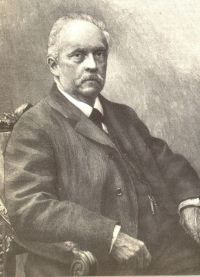
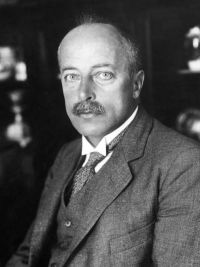
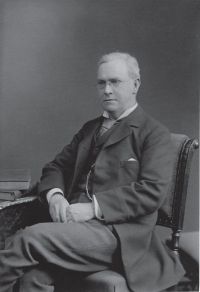
Hermann von Helmholtz (1821–1894), a German physicist and physiologist, profoundly influenced science through his work on energy conservation, sensory physiology, and the philosophy of perception. His formulation of the conservation of energy principle, articulated in On the Conservation of Force (1847), unified mechanics, heat, and electromagnetism, challenging vitalist doctrines. In physiology, he pioneered studies on vision, hearing, and neural transmission, inventing the ophthalmoscope and advancing psychophysics.
Philosophically, his Kantian-inspired approach bridged empirical science and aesthetics, shaping late 19th-century thought. Authors like Edmund Taylor Whittaker emphasized his role in formalizing energy principles, while Arthur Berry highlighted his astronomical insights on solar energy. Helmholtz’s own writings underscored the universality of natural laws, asserting that force transforms forms without loss, a principle that remains foundational in physics and beyond. His legacy lies in synthesizing empirical rigor with philosophical depth, leaving an indelible mark on science and epistemology.
 Edmund Taylor Whittaker,
A History of the Theories of Aether and Electricity
(1910)
Edmund Taylor Whittaker,
A History of the Theories of Aether and Electricity
(1910)