Summary

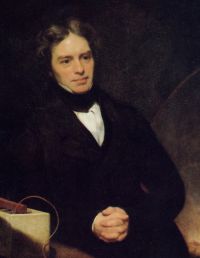
Portrait of Michael Faraday Michael Faraday The Chemical History of a Candle

PREFACE From the primitive pine-torch to the paraffin candle, how wide an interval! between them how vast a contrast! The means adopted by man to illuminate his home at night, stamp at once his position in the scale of civilisation. The fluid bitumen of the far East, blazing in rude vessels of baked earth; the Etruscan lamp, exquisite in form, yet ill adapted to its office; the whale, seal, or bear fat, filling the hut of the Esquimaux or Lap with odour rather than light; the huge wax candle on the glittering altar, the range of gas lamps in our streets,—all have their stories to tell.
Source: Gutenberg

Portrait of Michael Faraday Michael Faraday The Chemical History of a Candle (1908)

Just what occurs in my lungs—taking in oxygen from another source, namely, the atmosphere—takes place here by a more rapid process.
You will be astonished when I tell you what this curious play of carbon amounts to. A candle will burn some four, five, six, or seven hours. What, then, must be the daily amount of carbon going up into the air in the way of carbonic acid! What a quantity of carbon must go from each of us in respiration! What a wonderful change of carbon must take place under these circumstances of combustion or respiration!
Source: Wikisource

Get perspective with Kwize: daily news enlightened by great literature