“ Atmospheric pressure is greatest near the earth's surface, and exerts a controlling influence over the vital functions. Atmospheric pressure is to the body what the governor is to the steam engine, or the pendulum to the clock. ”
Atmospheric pressure
Definition and stakes
Atmospheric pressure, the force resulting from the weight of the air, is a key concept in meteorology and physics, defined as 101,325 pascals at sea level. Authors such as J. A. Munk compared it to a regulatory mechanism in the body, while Edwin Sharpe Grew demonstrated its physical effects at subterranean depths.
The National Weather Service highlighted its measurement and significance in aviation, connecting it to altimetry. These diverse viewpoints illustrate how atmospheric pressure influences both scientific knowledge and practical uses, ranging from weather forecasting to engineering, demonstrating its widespread impact on natural and human systems.
Quotes about “atmospheric pressure”
Edwin Sharpe Grew, The Romance of Modern Geology
“ At each second or third mile down there would be air-locks to prevent the air-pressure from becoming excessive, owing to the weight of the superincumbent air. For when we got between two and three miles down below the surface of the earth the atmospheric pressure there would be double what it is at the earth's surface, or, therefore, about thirty pounds to the square inch. It would not be easy to work under greater air-pressure than that, firstly because of the strain on the workmen, and secondly because of the rise of temperature which this increased air-pressure would cause. ”
by the National Weather Service, Aviation Weather: For Pilots and Flight Operations Personnel… (1975)
“ Atmospheric Pressure and Altimetry When you understand pressure, its measurement, and effects of temperature and altitude on pressure, you can more readily grasp the significance of pressure and its application to altimetry.Atmospheric Pressure Atmospheric pressure is the force per unit area exerted by the weight of the atmosphere. Since air is not solid, we cannot weigh it with conventional scales. Yet, Toricelli proved three centuries ago that he could weigh the atmosphere by balancing it against a column of mercury. ”


Related terms
Authors who wrote about “atmospheric pressure”
by the National Weather ServiceAlexander BuchanJacques Wardlaw Redway Cleveland AbbePaul Bert
 Elisha GrayCharles Fitzhugh TalmanA. C. Gilbert
 Robert DeCourcy WardWillis Luther MooreWilliam StirlingEnrico Angelo Lodovico NegrettiAlbert Francis Zahm
 William Wallace Campbell
 Josiah Willard GibbsEdwin Sharpe GrewJames H. StephensonWilliam Radcliff BirtVarious
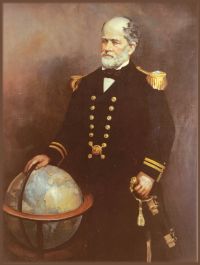 Matthew Fontaine Maury
Cleveland AbbePaul BertElisha GrayCharles Fitzhugh TalmanA. C. GilbertRobert DeCourcy WardWillis Luther MooreWilliam StirlingEnrico Angelo Lodovico NegrettiAlbert Francis ZahmWilliam Wallace CampbellJosiah Willard GibbsEdwin Sharpe GrewJames H. StephensonWilliam Radcliff BirtVariousMatthew Fontaine Maury