“ Too young art thou for strains of love; ’Tis not thy passion I would move; Instead of lover’s strains, I send The cordial wishes of a friend. Nobly has Nature done her duty, To give thee of thy mother’s beauty So large a share—oh! then be thine The mental charms that in her shine! And may thy father’s taste refin’d Still add new graces to thy mind; And may’st thou to each charm impart The gen’rous frankness of his heart. Then, my sweet Emma! thou shall move In many a heart more genuine love Than ever warm’d poetic line, Or sigh’d in any Valentine. ”
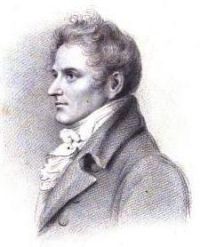
Sir John Carr
Biographical details

Sir John Carr (1772–1832), a British barrister and celebrated travel writer, is renowned for his vivid, accessible accounts of European journeys, which captivated 19th-century readers. His works, including The Stranger in France and A Tour through Holland, blend meticulous observation with a light, engaging style, reflecting his fascination with cultural landscapes and human nature.
A poet and dramatist as well, Carr’s oeuvre ranges from the lyrical (Poems) to the socio-political, as seen in his advocacy for press freedom. Knighted by the Duke of Bedford for his literary contributions, Carr’s legacy endures through his deft fusion of travelogue, verse, and moral reflection, offering a window into early modern Europe’s complexities.
Quotes by Sir John Carr
“ Where manly honour, taste refin’d, With ev’ry virtue, are combin’d; If you can quit a heart so true, Which has so often throbb’d for you, I’ll pity, tho’ I can’t reprove; And did I, such is Florio’s love, Eager he’d fly to take thy part, E’en in a war against his heart. THE MUSHROOM. Awake, my Muse! awake each slumb’ring string, And (mighty subject!) of a Mushroom sing, Fair to the eye, and pleasant to the taste; Charm’d by the note, a pigmy group, in haste, Lay down their grainy loads, as slow they move Thro’ lanes of reed and grass, to them a grove! ”
 Sir John Carr,
The stranger in France
Sir John Carr,
The stranger in France
“ From the attic story of a lofty house, built under this celebrated cliff, we ascended that part of it, which, upon the road to Paris, is only accessible in this manner. When we reached the top, the prospect was indeed superb; on one side we traced for miles, the romantic meanders of the Seine, every where forming little islands of poplars; before us, melting away in the horizon, were the blue mountains of Lower Normandy; at their feet, a variegated display of meadows, forests, corn fields, and vineyards; immediately below us, the city of Rouen, and its beautiful suburbs. ”
Sir John Carr,
A tour through Holland
(1807)
“ Such is the heart of a prince, who, almost unassailable in his mighty empire, and moved alone by the elevated desire of impeding the gigantic progress of a power which aims at universal domination, renounced all the pleasure of tranquillity, and at the head of his gallant legions thundered at the gates of princes, to awaken them from their fatal lethargy, and to invoke them to oppose the common enemy of the world. ”
“ Tho’ no funereal grandeur swell my song, Nor genius, eagle-plum’d, the strain prolong,— Tho’ Grief and Nature here alone combine To weep, my William! o’er a fate like thine,— Yet thy fond pray’r, still ling’ring on my ear, Shall force its way thro’ many a gushing tear: The Muse, that saw thy op’ning beauties spread, That lov’d thee living, shall lament thee dead! Ye graceful Virtues! while the note I breathe, Of sweetest flow’rs entwine a fun’ral wreath,— Of virgin flow’rs, and place them round his tomb, To bud, like him, and perish in their bloom! ”
Sir John Carr,
The stranger in France
“ The liberty of the press is the palladium of reason, the distributor of light and learning, the public and undismayed assertor of interdicted truth. It is the body and the honour guard of civil and political liberty. Where the laws halt with dread, the freedom of the press advances, and with the subtle activity of conscience, penetrates the fortified recesses and writes its fearful sentence on the palace wall of recoiling tyrants. As an englishman, my expiring sigh should be breathed for its preservation ”
“ Thus, in the bosom of some winding grove, Where oft the pensive melodist retires, From his sweet instrument, the note of love, Charms the rapt ear, but, as it charms, expires. Farewell, pure spirit! o’er thine early grave Oblivion ne’er shall spread her freezing shade; Nature shall bid her richest foliage wave Where her reposing fav’rite child is laid. There widow’d fondness oft, when summers bloom. Shall with thy infant pledge of love repair; Oft shall they kneel beside thy mossy tomb, And tears shall dew the flow’rs that blossom there. ”
Sir John Carr,
A tour through Holland
(1807)
“ Whilst a cruel and savage state of hostility between man and man thus embarrassed the progress of a traveller, whose only object was to contemplate the beautiful face of nature, never did the divine object of his pursuit appear more arrayed in the smiles of peace and loveliness. The government of Bonn, as well as Cologne, and all the other cities on the left bank of the Rhine is vested in a governor appointed by Napoleon, and is purely military. Under a clear and cloudless sky I bade adieu to Bonn with great reluctance, and embarked on board of the passage-boat bound to Cassel. ”
Sir John Carr,
The stranger in France
“ In my humble opinion, it is too much in the false taste of french statuary. A groupe of weeping angels surround the recumbent hero, in the attitudes of operatic figurantes, in whose faces, and forms, the artist has attempted, too laboriously and artificially, to delineate the expressions of graceful grief. On each side of the vast arch which divides the dome from the chapel, are raised the tablets of military honour, on which, in characters of gold, the names of those soldiers are recorded who have distinguished themselves for their achievements in the late war. ”
“ Tho’ there the mountain-nymph of song has pour’d Her loftiest strain, to bless the hero’s sword; Still, lovely wand’rer, with a jealous eye, O’er Scotia’s hills we see thy fancy fly; For here the warrior oft has rais’d his sword, The patriot too his noble blood has pour’d; Here too the sweet Recorder of the brave Has sat and sung upon her hero’s grave. Then cease, romantic maid! ah, cease to rove; The very wood-dove loves its native grove: Oh! then, let Nature bid thy guileless heart Here shed its love, and all its warmth impart ”
Sir John Carr,
A tour through Holland
(1807)
“ In France, the late revolution, in its savage phrenzy, with hands still reeking with the blood of the dying, tore open the tombs of princes, and their favourites, and disfigured the consecrated depositaries with the shattered fragments of their marble mausoleums: that revolution, which, with the guillotine in front, and the broken cross in the rear, threatened to spread over and waste the whole of civilized Europe, marched to Holland, where thousands flocked to its standard; but it there very rarely inebriated the mind, and never overpowered the national love of economy ”
“ And drink the drops that laid it low. Oh! thus, when sorrow wrings the heart, A sigh may rise, a tear may start; Pity shall soon the face impress With all its looks of happiness. VERSES ON AN AUTUMNAL LEAF. Think not, thou pride of Summer’s softest strain! Sweet dress of Nature, in her virgin bloom! That thou hast flutter’d to the breeze in vain, Or unlamented found thy native tomb. The Muse, who sought thee in the whisp’ring shade, When scarce one roving breeze was on the wing, With tones of genuine grief beholds thee fade, And asks thy quick return in earliest Spring. ”
Sir John Carr,
The stranger in France
“ Amongst them were many elegant, well dressed women, wholly unattended by gentlemen, a circumstance by no means unusual in Paris. This place seemed to be raised by the magic touch of enchantment. We entered upon gravelled walks, which were cut through little winding, and intersecting hillocks of box; those which formed the sides were surmounted by orange trees, which presented a beautiful colonnade; immediately after we had passed them, we entered an elegant treillage of honeysuckles, roses, and eglantine, which formed the grand entrance to the garden. ”
Sir John Carr,
A tour through Holland
(1807)
“ I see them around me with pleasure. Let them bear to their fellow-citizens the assurance of my solicitude and affection: let them carry the same testimony of these sentiments to Amsterdam; that city, which is the honour of commerce, and of the country: that city, which I wish to call my good and faithful capital, though the Hague will always remain the residence of the sovereign. Let them also carry the same assurances to their fellow-citizens, and the deputies of that neighbouring city, the prosperity of which I hope very soon to renew, and whose inhabitants I distinguish. ”
Sir John Carr,
The stranger in France
“ Near this church stands the beautiful fabric of the Corn Hall of Paris, designed by Monsieur le Grand. The dome of the bank of England is in the same style, but inferior, in point of lightness and elegance. That of the Corn Hall resembles a vast concavity of glass. In this noble building the millers deposit their corn for sale. Its deep and lofty arches and area, were nearly filled with sacks, containing that grain which is precious to all nations, but to none more than the french; to a frenchman, bread is most emphatically the staff of life. ”
“ Thy wit and humour claim the passing sigh: When, thro’ the hour, with unresisted skill, I’ve seen thee mould each feature to thy will,— When friends drew round thee with attentive ear, Pleas’d with the raill’ry which they could not fear. Oh! how I’ve heard thee, with concealing art, Join in the song, tho’ sorrow rent thy heart; How have I seen thee too, with venial guile, O’er many an anguish force the faithless smile,— Seen suffering Nature check each sigh, each fear, To rob maternal fondness of a tear! ”
Sir John Carr,
A tour through Holland
(1807)
“ Such is the celebrated Rondell of Amsterdam, which the Dutch who have never visited England contend is superior to our Vauxhall.With a large and very agreeable party, I made an excursion into North Holland, where we visited Brock, one of the most curious, and one of the prettiest villages in Holland. The streets are divided by little rivulets; the houses and summer-houses, formed of wood painted green and white, are very handsome, though whimsical in their shape, and are all remarkably neat. They are like so many mausoleums, for the silence of death reigns throughout the place. ”
Sir John Carr,
The stranger in France
“ Who will condemn a policy by which ignorance becomes enlightened, profligacy penitent, and which, as by stealth, imparts to the relenting bosom of ferocity the subdued, and social dispositions of true fraternity?To amuse, may be necessary to the present government of France, but surely to supplant the wild abandoned principles of a barbarous revolution, with new impressions, created by an unreserved display of the finest and most persuasive images of resigned suffering, heroic virtue, or elegant beauty, cannot be deemed unworthy of the ruler of a great people. ”
Sir John Carr,
A tour through Holland
(1807)
“ Zeyst is a very handsome town, or rather an assemblage of country-houses, it abounds with agreeable plantations and pleasant woods, and is much frequented in the summer by the middling classes of wealthy merchants from Amsterdam, who sit under the trees and smoke with profound gravity, occasionally looking at those who pass, without feeling any inclination to move themselves: what an enviable state of indifference to all the bustle and broil of this world! ”
“ The grove, green field, and op’ning flow’r, Are lost to thee! Dark child of Nature, as thou art! Yet thy poor bosom heaves no sigh; E’en now thy dimpling cheeks impart Their knowledge of some pleasure nigh:— ’Tis good for thee! Thou seem’st to say “I’ve sunshine too; ’Tis beaming in a spotless breast; No shade of guilt obstructs the view, And there are many not so blest, Who day’s blush see. “Dear are those eyes, by mine ne’er seen, Which I protect from many a tear; Kind stranger! ’tis on yonder green A mother’s aged form I rear: Oh! buy of me!” ”
Sir John Carr,
The stranger in France
“ In the course of one of my morning rambles in Paris, I visited the ruins of the celebrated Bastille, of which prison, only the arsenal, some fragments of its massy walls, and two or three dungeons remain. The volcanic vengeance of the people, has swept away this mighty fabric, which the revolting mind of republican liberty denounced as the frightful den of despotism, upon the approach to which no marks of returning footsteps were imprinted, whilst, in her mad career, she converted every private dwelling in the metropolis into a revolutionary prison: So much for popular consistency! ”
Sir John Carr,
A tour through Holland
(1807)
“ The stranger will find nothing to detain him in this melancholy town long. In Holland every traveller naturally becomes amphibious: the constant contemplation of so much water quickly engenders all the inclinations of a webfooted animal, and he soon feels out of his proper element when out of a canal. Right merrily did I follow my commissionary and his wheel barrow with my baggage through the whole town, until I reached the Hague gate, when my favourite conveyance, the treckschuyt, was ready to start. ”
“ Sad, near thy silent strings, I sit and sigh. Cold is that band which Music form’d her own, When ev’ry chord resign’d its sweetest tone. Ah! long, fair source of rapture, shall thou rest, Silent and sad, neglected and unprest, ’Till years, lov’d shade! superior pow’rs resign, Or raise one note more eloquent than thine. Tho’ with’ring Sickness mark’d thee in the womb, And form’d thy cradle but to form thy tomb, Yet, like a flow’r, she bade thee reach thy prime, The fairer victim for the stroke of Time. ”
Sir John Carr,
The stranger in France
“ The women in France never think their prerogatives infringed by this anti-anglo mode of salutation. Some shed tears at parting; but the cheek down which they trickled never lost its colour or vivacity. All were animated; every eye looked bright; there was a gayety in their very grief. "Bon voyage, bon voyage—Dieu vous benisse, Dieu vous benisse," reiterated on all sides from sprightly faces, stretched out of the window frames of the massy machine, as it rattled through the gates of the yard, to the incessant crackings of the postilion's long lash. ”
Sir John Carr,
A tour through Holland
(1807)
“ The ascent to this stupendous rock, which is eight hundred feet in a perpendicular line above the level of the river, is by a very narrow, steep, and winding path: the noble fortification on its sides, and the castles, arsenals, barracks, and batteries upon its summit, from whence the eye can behold the mountains of Lorraine, the meanders of the Rhine, and the countries through which it flows to a vast distance, and from which the beholder might almost think he could step into the clouds, are all roofless and dismantled. ”
“ TO TAKE THE COMMAND OF A SQUADRON. Oh! why does sorrow shade thy face, Where mind and beauty vie with grace? Say, dost thou for thy hero weep, Who gallantly, upon the deep, Is gone to tell the madd’ning foe, Tho’ vict’ry laid our Nelson low, We still have chiefs as greatly brave, Proudly triumphant on the wave? Dear to thy Country shalt thou be, Fair mourner! and her sympathy Is thine; for, in the war’s alarms, Thou gav’st thine hero from thine arms; And only ask’d to sigh alone, To look to heav’n, and weep him gone. ”
Sir John Carr,
The stranger in France
“ The scotch never bury in their churches, and their burial places are upon the confines of their towns. The eye of adoration is filled with a pensive pleasure, in observing itself surrounded with the endeavours of taste and ingenuity, to lift the remembrance of the great and good beyond the grave, in that very spot where the frailty of our nature is so often inculcated.Such a display, in such a place, is rational, suitable, and admonitory. The silent tomb becomes auxiliary to the eloquence of the pulpit. ”
Sir John Carr,
A tour through Holland
(1807)
“ Living in this dutchy is very cheap: a bachelor can keep a horse, dine at the first table d’hôte, and drink a bottle of wine a day, and mingle in the best circles, upon one hundred pounds per annum. The society in Darmstadt is very agreeable. As the minds of the men and women are so highly cultivated and accomplished in Germany, every party presents some mode or other, equally delightful and blameless, to make Time smile, and to strew over his passage with flowers. ”
“ I only can reward thee with a sigh, And wish that joys may crown thy peaceful nest. EPITAPH ON A FRIEND. By painful sickness long severely prest, Here sinks, on Nature’s sacred lap of rest, A friend, who, in a life too short, display’d A mind in virtue bright, without one shade. Hence with unusual grief is Fondness mov’d, Hence more than Pity’s sighs for one belov’d; Unshaken Honour sheds a manly tear, And weeping Virtue stops, a mourner here. ”
Sir John Carr,
The stranger in France
“ The sun-browned rugged plebeian, whose mind, by the influence of an unexampled political change, has been long alienated from all the noble feelings which religion and humanity inspire, is here seen, with his arms rudely folded over his breast, softening into pity, before the struggling and sinking sufferers of a deluged world, or silently imbibing from the divine resigned countenance of the crucified Saviour, a hope of unperishable bliss, beyond the grave. ”
Sir John Carr,
A tour through Holland
(1807)
“ As we turned a considerable meander of the river by Neuendorff, one of the grandest spectacles I almost ever contemplated opened upon me: the mighty rock of Ehrenbreitstein, formerly called the Gibraltar of the Rhine, with its dismantled batteries and ruined castles, rose with awful and unexampled majesty on the south; at its base was the palace formerly belonging to the Elector of Treves, and the town bearing the name of this wonderful fortification; and immediately opposite to it, as we advanced a little farther, the beautiful city of Coblentz appeared. ”
“ Here the laugh titter’d, there the lute of Love Fill’d with its melody the moon-light grove: All, all are fled!—Time ruthless stalks around, And bends the crumbling ruin to the ground: Time, Ladies, too (I know you do not like him, And, if a fan could end him, you would strike him) , Will with as little gallantry devour From your fair faces their bewitching pow’r; Then, like these ruins, beauteous in decay, Still shall you charm, and men shall still obey: Then, with remembrance soft, and tender smile, Perchance you’ll think upon this mossy pile ”
Sir John Carr,
The stranger in France
“ What would a perfumed french legislator say, accustomed to rise in the rustling of embroidered silks, and gracefully holding in his hand, a cap of soft and showy plumes, to address himself to alabaster statues, glittering lustres, grecian chairs, festoons of drapery, and an audience of beings tricked out as fine as himself, were he to be suddenly transported into a poor and paltry room, meanly lighted, badly ventilated, and inconveniently arranged, and to be told that, in that spot, the representatives of the first nation in the world, legislated for her subjects? ”
“ Ungrac’d by any thought of thine, Should but that gentle name appear, Fond cause of ev’ry joy and fear; I love, tho’ rude, I love it more, Than all thy piles of letter’d lore: Frown not if ev’ry airy word, Which Beauty breathes, or Love has heard, More rich, more eloquently, flow, To Mem’ry gives a warmer glow, Than all by thee so much approv’d, The wit of age on age improv’d. Go, then! and, since it is denied That thou shalt be my radiant guide! Leave me to sigh, to weep, to prove How little Learning is to Love. ”
Sir John Carr,
The stranger in France
“ The married women of France feel no compunctious visitings of conscience, in cherishing about them a circle of lovers, amongst whom their husbands are merely more favoured than the rest. I hope I shall not be considered as an apologist, for an indulgence which, in France, excites no jealousy in one, and no surprise amongst the many, when I declare, that I confidently believe, in most instances, it commences, and guiltlessly terminates in the love of admiration. I know, and visited in Paris, a most lovely and accomplished young woman, who had been married about two years. ”
“ Leads me to think of time, and heave a sigh; But when on thee and on thy charms I gaze, Time unremember’d moves, or seems to die. LINES Upon a Diamond Cross,WORN ON HER BOSOM BY MISS C.M. Well on that neck, sweet Kitty! may you wear The sparkling cross, with hopes to soften Heaven; For trust me, tho’ so very young and fair, Thou hast some little sins to be forgiven:— For all the hopes which wit and grace can spread, For all the sighs which countless charms can move, Fall, lovely Kitty! on thy youthful head; Yet fall they gently—for the crime is love. ”
Sir John Carr,
The stranger in France
“ Madame Bonaparte, who is considered to be in as good a state of subordination to her young husband, as the consular regiment is to their young general, contrives to exhibit her elegant person to great advantage; by adopting a judicious and graceful medium of dress, by which she tastefully avoids a load of decoration, which repels the eye by too dense a covering, and that questionable airiness of ornament which, by its gracious and unrestrained display, deprives the imagination of more than half its pleasures. ”
“ To sooth the sorrows of her friend. Associate Genius bids them flow With sounds that give a charm to woe; We weep as tho’ it were our own, As if our hearts were play’d upon. SONNET. The leaves are flutter’d by no tell-tale gales, Clear melts the azure in the rosy west, Scarce heard, the river winds along the vales, And Eve has lull’d the vocal grove to rest. To yon thick elms, my Delia! let us rove, As slow the glories of the day retire; There to thy lute breathe dulcet notes of love, While thro’ the vale they linger and expire. ”
Sir John Carr,
The stranger in France
“ A short time before my arrival at Paris, this great genius, who displays a perfect knowledge of mankind, and particularly of the people over whom he rules, discovered that the parisians, from a familiarity with his person, and from his lady and his family having occasionally joined in their parties of amusement, began to lose that degree of awe and respect for him, which he so well knows how to appreciate, as well as to inspire. ”
“ The absent lover calls thee slow,— “Too rapid,” says the happy lover. With bloom thy cheeks are now refin’d, Now to thine eye the tear is given; At once too cruel and too kind,— A little hell, a little heaven. Go then, thou charming myst’ry, go!— Yes, tho’ thou often dost amuse me, Tho’ many a joy to thee I owe, At once I thank thee and abuse thee. A ROUNDELAY. Wide thro’ the azure blue and bright Serenely floats the lamp of night; The sleeping waves forget to move, And silent is the cedar grove; Each breeze suspended seems to say— “Now, Leline, for thy Roundelay!” ”
Sir John Carr,
The stranger in France
“ In France, I was repeatedly asked my opinion of the probable stability of the peace. The question was always addressed in this rather curious shape: "Thank God, we have peace! Will your country let us enjoy it?"—My answer was, "You may be assured of it; for it will not cease to be prepared for war."Alas! the restless spirit of ambition seldom long delights in repose. The peaceful virtues, under whose influence Nations flourish and mankind rejoice, possess no lasting captivations for the Hero. ”
“ And Nature seem’d to start from out the wall. Hail, beauteous art! oh! that in equal lay Could but my Muse thy various pow’rs convey! ’Tis thine with silent eloquence to shew Passion’s strong image, Beauty’s rapt’rous glow, To soothe the parted lover’s anxious care, Who owns thee fairest of thy sisters fair; When waves divide him, still thro’ thee to trace The dear resemblance of that cherish’d face, Which he so oft with trembling lips has prest, So often gaz’d upon, so often blest! Thine too it is to seek the verdant plains Where Peace resides, where Rustic Beauty reigns ”
“ She bade me never love again. Then did my heart at once reply, “If you are false, who can be true? There’s nothing here deserves a sigh, Take this, the last, ’tis heav’d for you.” Ah! fickle fair! amid the scene That giddy pleasure may prepare, A pensive thought shall intervene, And touch your wand’ring heart with care. And when, alone, at eve you rove, Where arm in arm we oft have mov’d, Each Zephyr in the well-known grove Shall whisper that we once have lov’d. LINES WRITTEN IN A HERMITAGE, AT DRONNINGAARD, NEAR COPENHAGEN. Delicious gloom! asylum of repose! ”
“ Behold thy beauteous victim!—Ah! tis thine To rend fond hearts, and start the tend’rest tear Where joy should long in cloudless radiance shine. Alas! the mourning Muse in vain would paint, Blest shade! how purely pass’d thy life away, Or, with the meekness of a favour’d saint, How rose thy spirit to the realms of day. ’Twas thine to fill each part that gladdens life, Such as approving angels smile upon;— The faultless daughter, parent, friend, and wife,— Virtues short-lived! they set just as they shone. ”
“ And knelt a mourner at her tomb. When the night-breeze shall softly blow, When the bright moon upon the flood Shall spread her beams (a silv’ry show) , And dark be many a waving wood,— When, dimly [4] seen, in robes of white, A mournful train along the grove Shall bear the lamp of sacred light, To deck the turf of those they love,— Then shall the wood-dove quit its bow’r, And seek the spot were she is laid; Its wild and mournful notes shall pour A requiem to her hallow’d shade. ”
“ Abundant charms to fix th’ admiring eye: In furtive splendour ne’er art thou array’d, No plunder’d country mourns thy ruthless blade, Sees its transported treasures torn away, To grace a fierce ambitious Tyrant’s sway. Long in this isle, where Freedom finds repose, Whilst, raving round her, loud the tempest blows, Oh! long befriended, may the Arts excel, And bless the sacred spot they love so well! [20] “Then painting grew, and from the shades,” &c.—The shadows of plants, and indeed of every object in Nature, must, at a very early period, have furnished ideas of imitation. ”
“ Yes, ’tis Reflection’s chosen hour; for then, With pensive pleasure mingling o’er the scene, Th’ erratic mind treads over life again, And gazes on the past with eye serene. Those stormy passions which bedimm’d the soul, That oft have bid the joys it treasur’d fly, Now, like th’ unruffled waves of Ocean, roll With gentle lapse—their only sound a sigh. The galling wrong no longer knits the brow, Ambition feels the folly of her aim ”
