“ Such is Rouen, a city with as many facets as a jewel, each one of which contributes something to the perfect whole. We can see her as a city of magnificent churches, a city of famous Renaissance buildings, a city of narrow, crooked, winding streets, cobble-paved, and lined by mediæval timbered houses; we can see her in the light of an historic past, or as a wideawake city of the present day, with trams running along broad thoroughfares, with spacious quays and busy trade; she is a medley of the past and the present, and the one or the other is seen as it is sought. ”
Rouen
Definition and stakes
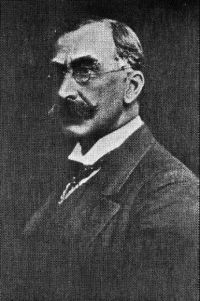
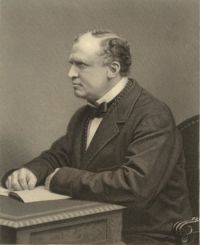
Rouen, a historic city in Normandy, France, is celebrated for its rich tapestry of medieval architecture, vibrant modernity, and strategic location along the Seine. Authors such as Guy de Maupassant evoke its lively present, noting its proximity to the Seine and thriving commerce, while Thomas Frognall Dibdin emphasizes its contrast between antiquity and activity, describing its "medieval timbered houses" alongside "bustle and noise.
" G. E. Mitton highlights Rouen’s duality as a "medley of the past and the present," reflecting its evolving identity. These perspectives collectively underscore Rouen’s enduring resonance as a city where history and contemporary life coexist dynamically.
Quotes about “Rouen”
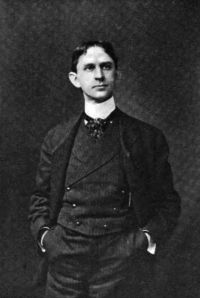
Michael Myers Shoemaker, Winged Wheels in France
“ As we glide away down her wide boulevard stretching by the river, the world is all astir about its business, and this Rouen is all of to-day, but as we speed off up the encircling hillside, the modern town drops down toward earth as it were, while the majestic cathedral and her sister churches lift their dark walls and spires higher and higher, towards the sky. ”
Thomas Frognall Dibdin,
A Bibliographical, Antiquarian and Picturesque Tour in France and Germany…
“ Thus you see of what various, strange, and striking objects the city of Rouen is composed. Bustle, noise, life and activity, in the midst of an atmosphere unsullied by the fumes of sea coal:--hilarity and apparent contentment:--the spruce bourgeoise and the slattern fille de chambre:--attired in vestments of deep crimson and dark blue--every thing flits before you as if touched by magic, and as if sorrow and misfortune were unknown to the inhabitants. ”
Thomas Frognall Dibdin,
A Bibliographical, Antiquarian and Picturesque Tour in France and Germany…
“ As we continued our route along the Boulevard Beauvoisine, we gained one of the most interesting and commanding views imaginable of the city of Rouen--just at that moment lighted up by the golden rays of a glorious sun- set--which gave a breadth and a mellower tone to the shadows upon the Cathedral and the Abbey of St. Ouen. The situation of Rouen renders it necessarily picturesque, view it from what spot you will.The population of Rouen is supposed to be full one hundred thousand souls. In truth, there is no end to the succession of human beings. ”
M. F. Mansfield, The Cathedrals of Northern France
“ NOTRE DAME DE ROUENRouen, of all the mediæval cities of France, is ever to the fore in the memories of the mere traveller for pleasure. In no sense are its charms of a negative quality, or few in number. Quite the reverse is the case; but the city's apparent attraction is its extreme accessibility, and the glamours that a metropolis of rank throws over itself; for it must not be denied that a countrified environment has not, for all, the appealing interest of a great city. ”
Guy de Maupassant,
The Horla
(1887)
“ I love the house in which I grew up. From my windows I can see the Seine, which flows by the side of my garden, on the other side of the road, almost through my grounds, the great and wide Seine, which goes to Rouen and Havre, and which is covered with boats passing to and fro. On the left, down yonder, lies Rouen, populous Rouen with its blue roofs massing under pointed, Gothic towers. ”
Michael Myers Shoemaker, Winged Wheels in France
“ As we move onward and into her streets we discover that the Rouen of to-day, while evidently a "member of one of our oldest families" is not a dead town. The Seine sweeping through her midst bears on its waters ships from all over the world as well as the quaint barges and puffing little steamers which come down from Paris. The old walls have vanished, giving place to wide boulevards, which encircle the ancient town and are in turn surrounded by far-spreading suburbs. Light and life is everywhere and the cafés over-flow far into the streets with their little tables and merry throngs. ”
Theodore Andrea Cook,
The Story of Rouen
“ As the sun sets slowly and the shadows gather, this aged sepulchre of the dead of Rouen gradually gives up its secrets, and the ancient city of past centuries reappears to the grating of the rebec of the "Danse Macabre." The broad boulevards of the morning sink into the soil, and in their place there gapes a mighty moat with massive buttresses above it. The Seine of yesterday grows wider, pushing the Quais back to the foot of the town walls, and above his youthful waters slope the rounded arches built by the Empress Matilda, wife of Geoffrey Plantagenet. ”
Emma Roberts, Notes of an Overland Journey Through France and Egypt to Bombay
“ After picking our way through the least objectionable of the streets in the heart of the city, we were glad to escape into the open air, and solace ourselves with the views presented on the neighbouring heights. Nothing can be finer than the landscapes round Rouen; every necessary of life appears to be cheap and plentiful, and persons desirous of a quiet and economical residence abroad might spend their time very happily in the outskirts of this picturesque city. ”
Theodore Andrea Cook,
The Story of Rouen
“ Thrice in 220 years had Rouen been besieged, once by the English and twice by its own countrymen, and each time the virtues of the famous "boise" had saved it from pillage and desecration. Upon its black and shining length the disputes of every century had been heard and settled: masters had brought up their quarrels with the workmen, merchants had wrangled over sharp practice in their business, girls had been summoned to receive a lecture from the elders of the parish on the flightiness and immodesty of their behaviour. ”
M. F. Mansfield, Rambles in Normandy
“ It was an appropriate home for a man of letters; for in the eighteenth century it housed a colony of Benedictines, and is destined to become one of those haunts of literary people, of which there are so many throughout France. All who go to Rouen should make a pilgrimage to the home of Flaubert.No one who knows Rouen, the city of the Northmen, the Conqueror, and of Jeanne d’Arc, will for a moment contest its right to be ranked as one of the liveliest, if not one of the biggest seaports of the world. One marvels at the size and number of deep-sea ships at its wharfs. ”
Prints and their makers: essays on engravers and etchers old and modern (1911)
“ His chief [Pg 243] delight is in the nooks and corners of old-world thoroughfares and culs-de-sac, where deep shadows lurk in the angles of time-worn buildings, and sunlight ripples over crumbling walls, seamy gables, and irregular tiled roofs. Of such is a series of subjects found in old Rouen—the St. Ouen; the Rue du Hallage, where the cathedral spire towers high above old timbered houses; and that charming plate with the title Old Houses, Rouen, a quaint corner of tenements whose high-pitched roofs stand propped against one another for all the world like a castle of cards. ”
With the World's Great Travellers…
“ Shall we set a foot down for a moment in the queer, interesting, busy old Norman town of Rouen, where everybody goes who goes to Paris, but where few stop for a look at what in many respects is most curious to see in all France? The broad, active quays, and the elegant modern buildings upon them, and the bridges, and the river with its barges and steamers, are, it is true, worth the seeing, and exposed to the eye of every passer, and give one the idea of a new and enterprising city. ”
T. W. Allies, Journal in France in 1845 and 1848 with Letters from Italy in 1847
“ It is a fine and noble country all the way; the view of Rouen as one passes over the bridge, under Notre Dame de bon Secours, is of ravishing beauty. The lofty banks of the Seine, 400 feet high, accompany one at a little distance, most of the way—and twice a tunnel cuts through them, and comes out suddenly on the peaceful banks of the river again. ”
Theodore Andrea Cook,
The Story of Rouen
“ The quays are crowded with a busy throng of workmen; on the stream are ships from every quarter of the world; great cranes are hoisting merchandise out of their holds and distributing it into the markets of the town, or into the barges for Paris and the Île-de-France. For this is the limit of the maritime Seine, and here, where the tide of ocean throbs upon her quays, it was but natural that the strength and commerce of Rouen should increase and multiply. ”
Hezekiah Butterworth,
Zigzag Journeys in Europe: Vacation Rambles in Historic Lands
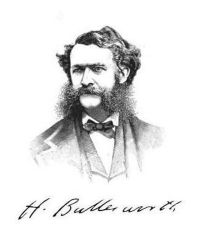
“ The streets of Rouen are narrow, but are full of life. Rouen has been called a New Paris, and Napoleon said that Havre, Rouen, and Paris were one city of which the river Seine was the highway. The gable-faced, timber-fronted mansions are interspersed with evidences of modern thrift, and the Rouen of romance seems everywhere disappearing in the Rouen of trade. ”
Albert Bigelow Paine,
The Car That Went Abroad: Motoring Through the Golden Age
“ It was at Rouen that we started to trace backward the sacred footprints of Joan of Arc, saint and savior of France. For it is at Rouen that the pathway ends. When we had visited the great cathedral, whose fairy-like façade is one of the most beautiful in the world, we drove to a corner of the old Market Place, and stopped before a bronze tablet which tells that on this spot on a certain day in May, 1431 (it was the 29th) , the only spotless soul in France, a young girl who had saved her country from an invading and conquering enemy, was burned at the stake. ”
Edward Stanley,
Before and after Waterloo
“ If Havre can strike the eye of a stranger, what must not Rouen do? Every step teems with novelty and richness, Gothic gateways, halls, and houses. What are our churches and cathedrals in England compared to the noble specimens of Gothic architecture which here present themselves?... Rouen has scarcely yet recovered from the dread they were in of the Cossacks, who were fully expected, and all valuables secreted—not that they were absolutely without news from the capital: the diligence had been stopped only once during the three days after the Allies entered Paris. ”
Theodore Andrea Cook,
The Story of Rouen
“ THE artist who first truly understood the rendering of light is also the workman whose shadows are the deepest in every scene he drew. If I were to leave you with an impression of the sixteenth century either in Rouen or elsewhere—that was composed of gorgeous ceremonial, of exquisite architecture, of superabundant energy and life, and of these only, you would neither appreciate the many influences which wrought upon the men and women of those days, nor estimate at their true worth the changing events, on which we now look back in the large perspective of so many generations. ”
Dawson Turner, Account of a Tour in Normandy, Volume 1
“ But, if I may borrow the pun of which old Peter Heylin is guilty when, describing Paris, Rouen is still a strong city, "for it taketh you by the nose." The filth is extreme; villainous smells overcome you in every quarter, and from every quarter. The streets are gloomy, narrow, and crooked, and the houses at once mean and lofty. Even on the quay, where all the activity of commerce is visible, and where the outward signs of opulence might be expected, there is nothing to fulfil the expectation. ”
John Cassell,
Cassell's Illustrated History of England
(1865)
“ The siege of Rouen was the grand operation which was not only to lay all Normandy at the foot of the conqueror, but open the highway to Paris. Rouen, the capital of Upper Normandy, was at that time one of the most populous and beautiful cities in France. It is situated within a semicircle of hills, smooth in character, but of considerable elevation; and its southern side is washed by the broad waters of the Seine. It is said to have contained 200,000 inhabitants; but, if that were true, a very large proportion must have inhabited the suburbs. ”
Theodore Andrea Cook,
The Story of Rouen
“ Few travellers go there, yet it is well worth the while, for here are collected many relics of an age that has left few traces anywhere, and here can be filled up many gaps in that story of Rouen which you can never read completely in what is left of the old town. In the courtyard that faces the Rue de la République are several of the ancient gateways that have given way before the press of modern traffic, and a few façades of carved and timbered houses rest like empty masks against the wall, looking forlorn enough, yet better here than lost. ”
Theodore Andrea Cook,
The Story of Rouen
“ THE cluster of old buildings which are beneath the shadow of the belfry are perhaps better known to strangers than any other piece of architecture in the town. It is the focal point of Rouen, the centre of its civic life, and if you are fortunate enough to live quite close to it, as I did, you will find yourself in the best place for starting on nearly every expedition that your fancy may dictate. ”
Gordon Home, Normandy: The Scenery & Romance of Its Ancient Towns…
“ How much we would give to have an opportunity for seeing the Rouen which has vanished, for to-day as we walk along the modern streets there is often nothing to remind us of the centuries crowded with momentous events that have taken place where now the electric cars sweep to and fro and do their best to make one forget the Rouen of mediaeval times. ”
Theodore Andrea Cook,
The Story of Rouen
“ From the earliest hour at the breaking of the dawn of Ascension Day, the whole of Rouen was thinking and talking of nothing else except the prisoner, and in every quarter of the city the interest in him took a different form. All the countryside of Vexin and of Caux had trooped into the town with women and children in their Sunday best. From the attic windows of the Rue de l'Épicerie girls in flapping white head-dresses leant across the road and screamed their good fortune to the neighbours opposite ”
Theodore Andrea Cook,
The Story of Rouen
“ Let it be said at once that the "Old Rouen" you will first see is almost completely a French Renaissance city of the sixteenth century. Of older buildings you will find only slight and imperfect remnants, and as you pass monstrosities more modern you will involuntarily close your eyes. ”
Charlotte Biggs, A Residence in France During the Years 1792…
“ Rouen, like most of the great towns in France, is what is called decidedly aristocratic; that is, the rich are discontented because they are without security, and the poor because they want bread. But these complaints are not peculiar to large places; the causes of them equally exist in the smallest village, and the only difference which fixes the imputation of aristocracy on one more than the other, is, daring to murmur, or submitting in silence. ”
Theodore Andrea Cook,
The Story of Rouen
“ To these three kinds of architecture I have attached this story of Rouen, because even in its remotest syllables there are some traces left that are still visible; and these traces increase as the story approaches modern times. While moats and ramparts still sever a city from its surrounding territory, the space within the walls preserves many of those sharply defined characteristics which grow fainter when town and country merge one into the other; the modern suburb gradually destroys the personality both of what it sprang from and of what it viiimeets. ”
Theodore Andrea Cook,
The Story of Rouen
“ Far behind your right shoulder rise the spires of Rouen; away to the left is the church tower of Darnétal; in the opposite horizon the great slope of St. Catherine rises to the sky. Within this quiet square Archbishop Guillaume de l'Estrange built the Chartreuse de Notre Dame de la Rose, in 1386, rather more than a mile from the Porte St. Hilaire, in that cool valley between St. Catherine and Darnétal, which is shut in by the interlacing arms of Robec and Aubette. ”
Theodore Andrea Cook,
The Story of Rouen
“ Rouen has in its turn been the most southerly city of a Norman Duke's possessions, then the central fortress of an Angevin Empire that stretched from Forth to Pyrenees, then a northern bulwark for the Kings of Paris against the opposing cliffs of England. It has sent out fleets upon the sea, and armies upon land. It has been independent of its neighbours, it has led them against a common foe, and it has undergone with them a national disaster. ”
Francis Hervé, How to Enjoy Paris in 1842
“ Above all, the traveller must not fail to visit Mount Catherine, which rises just above the city, and commands a view equally beautiful and extensive. The delightful environs of Rouen are displayed before him, comprising almost every scenic beauty that a country can afford; even the factories, which in most places rather deform the view than otherwise, are here so constructed as to contribute to its ornament, more resembling villas than buildings solely for utility. ”