“ KING EDWARD. Edward Plantagenet, in the name of God, As with this armour I impale thy breast, So be thy noble unrelenting heart Walled in with flint of matchless fortitude, That never base affections enter there: Fight and be valiant, conquer where thou comest! Now follow, Lords, and do him honor to.DARBY. Edward Plantagenet, prince of Wales, As I do set this helmet on thy head, Wherewith the chamber of thy brain is fenst, So may thy temples, with Bellona’s hand, Be still adorned with laurel victory: Fight and be valiant, conquer where thou comest! ”
Plantagenet
Definition and stakes
The Plantagenet dynasty, a crucial lineage in medieval English history, represents both royal power and the chaos of political conflict. Authors have long examined its legacy, from Shakespeare’s dramatization of Plantagenet courage in King Edward III to Mary Shelley’s depiction of its tragic human aspects in The Fortunes of Perkin Warbeck.
Grant Allen’s Blood Royal analyzes the family’s social standing, while Disraeli’s Venetia humorously alludes to the name in a domestic setting. These diverse perspectives highlight the Plantagenet name’s lasting significance as a symbol of authority, selfhood, and historical legend.
Quotes about “Plantagenet”
 William Shakespeare,
Henry VI, Part 3
(1595)
William Shakespeare,
Henry VI, Part 3
(1595)
“ WARWICK The bloody parliament shall this be call'd, Unless Plantagenet, Duke of York, be king, And bashful Henry deposed, whose cowardice Hath made us by-words to our enemies. YORK Then leave me not, my lords; be resolute; I mean to take possession of my right. WARWICK Neither the king, nor he that loves him best, The proudest he that holds up Lancaster, Dares stir a wing, if Warwick shake his bells. I'll plant Plantagenet, root him up who dares: Resolve thee, Richard; claim the English crown. ”
 Grant Allen,
Blood Royal: A Novel
Grant Allen,
Blood Royal: A Novel
“ Plantagenet as they sat at supper that, if he burst in upon the White Horse as the first bearer of such novel and important gossip—how his son Richard was shortly going to enter as an undergraduate at Durham College, Oxford—not only would he gain for himself great honour and glory, but also some sympathizing friend, proud to possess the privilege of acquaintance with so distinguished a family, would doubtless mark his sense of the dignity of the occasion by offering its head the trifling hospitality of a brandy-and-soda. ”
Related terms
Authors who wrote about “Plantagenet”
Grant AllenWilliam ShakespeareMary Wollstonecraft ShelleyJohn G. Edgar Leslie StephenAnonymousEarl of Beaconsfield Benjamin DisraeliMary ShelleyF. Marion Crawford
 James Branch Cabell
 Talbot Baines ReedEsther SingletonKate Dickinson SweetserEvelyn Everett-GreenShakespeare
 B. L. Farjeon
 Charles MacFarlane
 Lord Ronald Sutherland Gower
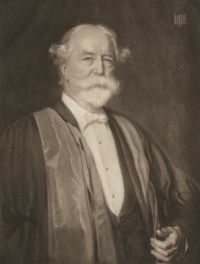 Sir Adolphus William Ward
 Bill Nye