Summary

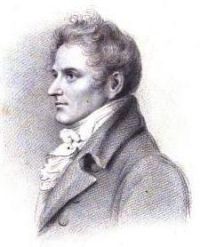
Portrait of Sir John Carr Sir John Carr The stranger in France

From the attic story of a lofty house, built under this celebrated cliff, we ascended that part of it, which, upon the road to Paris, is only accessible in this manner. When we reached the top, the prospect was indeed superb; on one side we traced for miles, the romantic meanders of the Seine, every where forming little islands of poplars; before us, melting away in the horizon, were the blue mountains of Lower Normandy; at their feet, a variegated display of meadows, forests, corn fields, and vineyards; immediately below us, the city of Rouen, and its beautiful suburbs.
Source: Gutenberg

Portrait of Sir John Carr Sir John Carr The stranger in France

In France, I was repeatedly asked my opinion of the probable stability of the peace. The question was always addressed in this rather curious shape: "Thank God, we have peace! Will your country let us enjoy it?"—My answer was, "You may be assured of it; for it will not cease to be prepared for war."
Alas! the restless spirit of ambition seldom long delights in repose. The peaceful virtues, under whose influence Nations flourish and mankind rejoice, possess no lasting captivations for the Hero.
Source: Gutenberg

Portrait of Sir John Carr Sir John Carr The stranger in France

Near this church stands the beautiful fabric of the Corn Hall of Paris, designed by Monsieur le Grand. The dome of the bank of England is in the same style, but inferior, in point of lightness and elegance. That of the Corn Hall resembles a vast concavity of glass. In this noble building the millers deposit their corn for sale. Its deep and lofty arches and area, were nearly filled with sacks, containing that grain which is precious to all nations, but to none more than the french; to a frenchman, bread is most emphatically the staff of life.
Source: Gutenberg

Get perspective with Kwize: daily news enlightened by great literature