Palais Garnier

Definition and stakes

Richard Phené Spiers 1911 Encyclopædia Britannica, Volume 11… (1911)

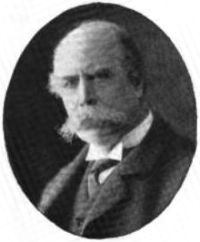
Of Garnier’s other works, the most remarkable are the Casino at Monte Carlo, the Bischoffsheim villa at Bordighera, the Hôtel du Cercle de la Librairie in Paris; and, among tombs, those of the musicians Bizet, Offenbach, Massé and Duprato. In 1874 he was elected a member of the Institute of France, and after passing through the grades of chevalier, officer and commander of the Legion of Honour, received in 1895 the rank of grand officer, a high distinction that had never before been granted to an architect.
Source: Wikisource

Henry-Russell Hitchcock Architecture (1963)

Yet in Garnier’s work, as in Lefuel’s, a generically Neo-Baroque effect is achieved with elements mostly High Renaissance in origin, but here Italian rather than French. The richly coloured marbles, the admirably placed sculpture by Carpeaux, and above all the fashion in which the masses pile up—from the ornate colonnade crowning the main façade, through the half-dome which expresses the auditorium externally, to the tall stage-house at the rear—is much richer plastically than the somewhat repetitive scheme of the New Louvre.
Source: Gutenberg

M. Garnier An Inquiry Into the Nature and Causes of the Wealth of Nations

Noble palaces, magnificent villas, great collections of books, statues, pictures, and other curiosities, are frequently both an ornament and an honour, not only to the neighbourhood, but to the whole country to which they belong. Versailles is an ornament and an honour to France, Stowe and Wilton to England. Italy still continues to command some sort of veneration, by the number of monuments of this kind which it possesses, though the wealth which produced them has decayed, and though the genius which planned them seems to be extinguished, perhaps from not having the same employment.
Source: Gutenberg

Get perspective with Kwize: daily news enlightened by great literature