“ True politeness is the outward visible sign of those inward spiritual graces called modesty, unselfishness and generosity. The manners of a gentleman are the index of his soul. His speech is innocent, because his life is pure; his thoughts are right, because his actions are upright; his bearing is gentle, because his feelings, his impulses, and his training are gentle also. A gentleman is entirely free from every kind of pretence. ”
Politeness
Definition and stakes
Politeness, the practical application of good manners to avoid causing offense, is a culturally shaped phenomenon where norms differ across societies. From Enlightenment ideals of refined etiquette to contemporary discussions on its emotional foundations, authors such as Lydia Maria Child and John Mather Austin view it as an expression of inner virtues like kindness and respect.
While some, like Florence Hartley, warn of its potential for hypocrisy, others highlight its role in promoting genuine social harmony. Synthesizing these viewpoints, politeness appears both as a learned behavior and as a manifestation of moral intent, connecting cultural expectations with personal values.
Quotes about “politeness”
 Lydia Maria Child,
The mother's book
(1846)
Lydia Maria Child,
The mother's book
(1846)
“ It is a graceful habit for children to say to each other, ‘Will you have the goodness?’—and ‘I thank you.’ I do not like to see prim, artificial children; there are few things I dislike so much as a miniature beau, or belle. But the habit of good manners by no means implies affectation or restraint. It is quite as easy to say, ‘Please to give me a piece of pie,’ as to say, ‘I want a piece of pie.’The idea that constant politeness would render social life too stiff and restrained, springs from a false estimate of politeness. True politeness is perfect ease and freedom. ”
 Frederick William Robertson,
Sermons Preached at Brighton
Frederick William Robertson,
Sermons Preached at Brighton
“ All the habits and rules of polite life would be whispering such advice as this: “Only keep your remarks within the limits of politeness. If you cannot approve, be silent; you can do no good by finding fault with the great.” ”
Florence Hartley, The Ladies' Book of Etiquette, and Manual of Politeness
“ Many believe that politeness is but a mask worn in the world to conceal bad passions and impulses, and to make a show of possessing virtues not really existing in the heart; thus, that politeness is merely hypocrisy and dissimulation. ”
John Mather Austin, Golden Steps to Respectability…
“ Politeness, in its true acceptation, is but another word for kindness. The truly polite man and woman, are not haughty, nor exclusive—they are not starched, nor supercilious. They show their politeness in being respectful to the feelings of persons of every rank, condition, and complexion. They treat all kindly and gently; and seek to make those in their presence to feel easy and happy. The whole secret of politeness may be summed up in a single sentence—Make yourselves agreeable and pleasant to whomsoever you meet. ”
S. Annie Frost, Frost's Laws and By-Laws of American Society
“ True politeness must come from the heart, from an unselfish desire to please others and contribute to their happiness; when upon this natural impulse is placed the polish of a complete and thorough knowledge of the laws of etiquette, the manners must be perfect and graceful. ”
Lydia Maria Child,
The mother's book
(1846)
“ In politeness, as in many other things connected with the formation of character, people in general begin outside, when they should begin inside; instead of beginning with the heart, and trusting that to form the manners, they begin with the manners, and trust the heart to chance influences. ”
“ Then politeness gets the better of pride, and, rising with a mighty effort, they stretch themselves, yawn, and, going up to her, thrust their soft muzzles into her hands and look up at her with their great, liquid, loving eyes. ”
Mrs. Henry S. Mackarness, Etiquette for Little Folks (1856)
“ Cherish that delicacy of sentiment, that quick sympathy [Pg 71] with others, that nice sense of justice which will make you as regardful of their feelings as of their more substantial rights, and you will not fail to be polite. Without the sentiments of a gentleman, you may know all the rules of politeness, and be scrupulously observant of all the external forms of good breeding, and yet never be a gentleman. ”
Mary G. Ware, The elements of character
“ If, on the contrary, we are polite from an inward conviction that politeness is one of the forms of love to the neighbor, and because we believe that in being polite we are performing a duty that our neighbor has a right to claim from us, and because politeness is a trait that we love for its own inherent beauty, our manners belong to the substance of our Character,—they are not its garment, but its skin; and this is the permanent side of manners. Such manners will be ours in death, and afterwards, no less than in life. ”
Cecil B. Hartley, The Gentlemen's Book of Etiquette and Manual of Politeness
“ Remember, however, “once a gentleman always a gentleman,” and be sure that you can so carry out the rule, that in your most careless, joyous moments, when freest from the restraints of etiquette, you can still be recognizable as a gentleman by every act, word, or look.Avoid too great a restraint of manner. Stiffness is not politeness, and, while you observe every rule, you may appear to heed none. To make your politeness part of yourself, inseparable from every action, is the height of gentlemanly elegance and finish of manner. ”
Cecil B. Hartley, The Gentlemen's Book of Etiquette and Manual of Politeness
“ Indeed, one of the essential characteristics of courtesy is good nature, and an inclination always to look at the bright side of things.The principal rules of politeness are, to subdue the temper, to submit to the weakness of our fellow men, and to render to all their due, freely and courteously. ”
Emory Adams Allen, The Golden Gems of Life; Or, Gathered Jewels for the Home Circle
“ We despise servility, but true and uniform politeness is the glory of any young man. It should be a politeness full of frankness and good nature, unobtrusive, constant, and uniform in its exhibition to every class of men. ”
John A. Cone, The Man Who Pleases and the Woman Who Charms
“ The men and women who have accomplished great things in the world have, as a rule, understood the value of politeness, and have acted in accordance with that knowledge. You can, possibly, recall a very few exceptions, but these were persons great in spite of their lack of courtesy, and they would have been even greater had they practiced the art of gentle manners. ”
 Ralph Waldo Trine,
What All The World's A-Seeking
Ralph Waldo Trine,
What All The World's A-Seeking
“ No, true gentlemanliness and politeness always comes from within, and is born of a life of love, kindliness, and service. This is the universal language, known and understood everywhere, even when our words are not. There is, you know, a beautiful old proverb which says, "He who is kind and courteous to strangers thereby shows himself a citizen of the world." And there is nothing so remembered, and that so endears one to all mankind, as this universal language. Even dumb animals understand it and are affected by it. ”
Edward Berens, Advice to a Young Man upon First Going to Oxford
“ Most of the external forms and modes of modern politeness, its bows and obeisances, its professions of respect and service, its adulations, are nothing but an affectation of such humility, and bear witness to its value when it exists in reality. ”
Florence Hartley, The Ladies' Book of Etiquette, and Manual of Politeness
“ I wish it were possible to convince every woman that politeness is a most excellent good quality; that it is a necessary ingredient in social comfort, and a capital assistant to actual prosperity. Like most good things, however, the word politeness is often misunderstood and misapplied ”
Cecil B. Hartley, The Gentlemen's Book of Etiquette and Manual of Politeness
“ Years may pass over our heads without affording an opportunity for acts of high beneficence or extensive utility; whereas, not a day passes, but in common transactions of life, and, especially in the intercourse of society, courtesy finds place for promoting the happiness of others, and for strengthening in ourselves the habits of unselfish politeness. There are situations, not a few, in human life, when an encouraging reception, a condescending behaviour, and a look of sympathy, bring greater relief to the heart than the most bountiful gift. ”
Cecil B. Hartley, The Gentlemen's Book of Etiquette and Manual of Politeness
“ On the other hand, you will meet constantly, in the best society, men whose polish of manner is exquisite,{34} who will perform to the minutest point the niceties of good breeding, who never commit the least act that is forbidden by the strictest rules of etiquette; yet under all this mask of chivalry, gallantry, and politeness will carry a cold, selfish heart; will, with a sweet smile, graceful bow, and elegant language, wound deeply the feelings of others, and while passing in society for models of courtesy and elegance of manner, be in feeling as cruel and barbarous as the veriest savage. ”
Florence Hartley, The Ladies' Book of Etiquette, and Manual of Politeness
“ It is very true there are those whose position in society compels them to observe certain rules of etiquette which pass for politeness. They bow or courtesy with a decent grace; shake hands with the precise degree of vigor which the circumstances of the case require; speak just at the right time, and in the required manner, and smile with elegant propriety. Not a tone, look, or gesture, is out of place; not a habit indulged which etiquette forbids ”
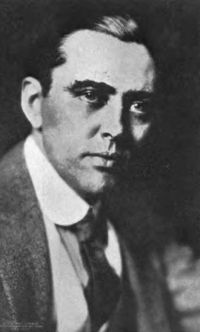 Julian Street,
Mysterious Japan
Julian Street,
Mysterious Japan
“ Far from being servile it is a proud politeness—a politeness grounded upon custom, sensitiveness of nature, delicacy of feeling, which cause the possessor to expect in others a like sensitiveness and delicacy and to make him wish to outdo them in tact and consideration. ”
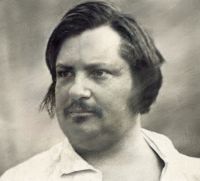 Honoré de Balzac,
The Physiology of Marriage, Part 1
Honoré de Balzac,
The Physiology of Marriage, Part 1
“ Virtue, perhaps, is nothing more than politeness of soul. ”
American lady, The Ladies' Vase; Or, Polite Manual for Young Ladies
“ Let the young polish their manners, not by attending to mere artificial rules, but by the cultivation of right feelings. Let them mingle with refined society as often as they can; and, by refined society, I do not mean those whom you find in the ball-room—in the theater—in the crowded party, or those—however wealthy, or richly dressed—you feel to be only artificially [12] polite; but I mean those who make you feel at ease in their society, while, at the same time, they elevate your aims and polish your manners. What a good style is to noble sentiments, politeness is to virtue. ”
Lydia Maria Child,
The mother's book
(1846)
“ In connexion with politeness, I would again allude to the great importance of habits of observation. What [Pg 119] is called native politeness is entirely the result of kind feelings combined with habits of attention. Everybody has observed that men of the world have a wonderful facility in adapting themselves to all varieties of character. Their faculty of pleasing everybody seems like instinct, yet, in fact, it is merely the result of close observation. ”
 Henry Charles Carey,
The Slave Trade, Domestic and Foreign
Henry Charles Carey,
The Slave Trade, Domestic and Foreign
“ If in the midst of the very kindness which made him at home upon the briefest acquaintance, he should perceive an attentive politeness, approaching so near to formality as now and then to embarrass him, he would soon be brought to understand and admire it as the expression of habitual consideration for the feelings of others. ”
Florence Hartley, The Ladies' Book of Etiquette, and Manual of Politeness
“ It is that which imparts ease and confidence to our manners, and impels us, for our own sake, as well as for the sake of others, to behave becomingly as intelligent beings.It is a want of true politeness that introduces the discord and confusion which too often make our homes unhappy. ”
 Jerome K. Jerome,
The Angel and the Author, and Others
Jerome K. Jerome,
The Angel and the Author, and Others
“ Politeness would seem to have been invented for the comfort of the undeserving. We let fall our rain of compliments upon the unjust and the just without distinction. Every hostess has provided us with the most charming evening of our life. ”
 Susan Coolidge,
A Little Country Girl
Susan Coolidge,
A Little Country Girl
“ Gray, coolly. "And that reminds me to say just one other word about good breeding toward servants and people who work for us, or are poor and need our help. Gentleness and politeness are even more important with them than they are with other people." ”
 Arthur Schopenhauer,
The Essays of Arthur Schopenhauer…
Arthur Schopenhauer,
The Essays of Arthur Schopenhauer…
“ Hence politeness is to human nature what warmth is to wax. ”
 M. E. W. Sherwood,
Manners and Social Usages
M. E. W. Sherwood,
Manners and Social Usages
“ Some one calls politeness "benevolence in trifles, the preference of others to ourselves in little, daily, hourly occurrences in the business of life, a better place, a more commodious seat, priority in being helped at table," etc. ”
Florence Hartley, The Ladies' Book of Etiquette, and Manual of Politeness
“ Politeness, founded upon such a rule, becomes the expression, in graceful manner, of social virtues. The spirit of politeness consists in a certain attention to forms and ceremonies, which are meant both to please others and ourselves, and to make others pleased with us; a still clearer definition may be given by saying that politeness is goodness of heart put into daily practice; there can be no true politeness without kindness, purity, singleness of heart, and sensibility. ”
S. Annie Frost, Frost's Laws and By-Laws of American Society
“ Granted that truthfulness, gracefulness, considerateness, unselfishness, are essential to the breeding of a true gentleman, how infinitely essential must they be to the breeding of a true lady! That her tact should be even readier, her sympathies even tenderer, her instinct even finer than those of the man, seems only fit and natural. In her politeness, prevcyance, and all the minor observances of etiquette, are absolutely indispensable. ”
Ralph Waldo Trine,
What All The World's A-Seeking
“ What a relief to turn from such a one to one who, instead of thinking always of self, has continually in mind the ease and comfort and pleasure he can give to others, who, in other words, is the true gentle-man, and with whom true politeness is natural; for one's every act is born of his thoughts. ”
Arthur Martine, Martine's Hand-book of Etiquette…
“ If a gentleman is seated by the side of a lady or elderly person, politeness requires him to save them all trouble of pouring out for themselves to drink, and of obtaining whatever they are in want of at the table. ”
Margaret C. Conkling, The American Gentleman's Guide to Politeness and Fashion
“ As a rule, direct questions are inadmissible in good society. Listen with politeness to what may be voluntarily communicated to you by your associates, regarding themselves, but on no account, indulge an impertinent curiosity in such matters; and when courtesy sanctions the manifestation of interest, express your desire for information in polite language, and with a half-apologetic manner, that will permit reserve, without embarrassment to either party. ”
Mary G. Ware, The elements of character
“ If we cultivate the external forms of politeness from an indirect motive, that is, from the love of approbation, or from pride of character, it is the reward we love, and not the virtue; and if we gain this reward, it is only external and perishable ”
Cecil B. Hartley, The Gentlemen's Book of Etiquette and Manual of Politeness
“ A gentleman may and will treat his washerwoman with respect and courtesy, and his boot-black with pleasant affability, yet preserve perfectly his own position. To really merit the name of a polite, finished gentleman, you must be polite at all times and under all circumstances.There is a difference between politeness and etiquette. Real politeness is in-born, and may exist in the savage, while etiquette is the outward expression of politeness reduced to the rules current in good society. ”
Florence Hartley, The Ladies' Book of Etiquette, and Manual of Politeness
“ Politeness, being based upon real kindness of heart, cannot exist where there is selfishness or brutality to warp its growth. [5] It is founded upon love of the neighbor, and a desire to be beloved, and to show love. Thus, where such pure, noble feelings do not exist, the mere forms of politeness become hypocrisy and deceit.Rudeness will repel, where courtesy would attract friends. ”
 Jean Paul,
Flower, Fruit, and Thorn Pieces…
Jean Paul,
Flower, Fruit, and Thorn Pieces…
“ It is impossible to describe the amount of soothing influence which little acts of politeness and innocent flatteries exercise upon just the very people who usually expect, and receive, none—wives, sisters, relations—and this even when they quite understand what this politeness really amounts to. ”
 Lady Lucie Duff Gordon,
Letters from Egypt
Lady Lucie Duff Gordon,
Letters from Egypt
“ The rules of politeness are the same for all. The passer-by greets the one sitting still, or the one who comes into a room those who are already there, without distinction of rank. When I have greeted the men they always rise, but if I pass without, they take no notice of me. ”
John Ormsby Miller, Short Studies in Ethics: An Elementary Text-Book for Schools
“ We must be careful to distinguish between Politeness and Courtesy. Any one can learn certain rules of Politeness, even though he be coarse at heart. Some men put on Politeness with their evening coats, but are the reverse of polite in their everyday garb. ”
Florence Hartley, The Ladies' Book of Etiquette, and Manual of Politeness
“ By endeavoring to acquire the habit of politeness, it will soon become familiar, and sit on you with ease, if not with elegance. Let it never be forgotten, that genuine politeness is a great fosterer of family love; it allays accidental irritation, by preventing harsh retorts and rude contradictions; it softens the boisterous, stimulates the indolent, suppresses selfishness, and by forming a habit of consideration for others, harmonizes the whole. Politeness begets politeness, and brothers may be easily won by it, to leave off the rude ways they bring home from school or college. ”
Cora C. Klein, Practical Etiquette
“ A high sense of honor, a determination never to take a mean advantage of another, and an adherence to truth, delicacy, and politeness towards those with whom one may have dealings, are the essential and distinguishing characteristics of a gentleman. ”
Related terms
Authors who wrote about “politeness”
Florence HartleyElisabeth CelnartCecil B. HartleyMargaret C. ConklingArthur MartineS. Annie FrostSamuel R. WellsJohn Mather AustinAmerican ladyJohn H. YoungJohn A. ConeMrs. Henry S. Mackarness Winthrop Mackworth PraedEarl of Philip Dormer Stanhope ChesterfieldCora C. KleinLydia Maria Child
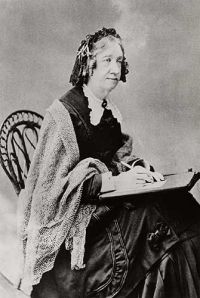 Catharine Esther BeecherAnonymousMary G. WareRalph Waldo Trine
Winthrop Mackworth PraedEarl of Philip Dormer Stanhope ChesterfieldCora C. KleinLydia Maria ChildCatharine Esther BeecherAnonymousMary G. WareRalph Waldo Trine