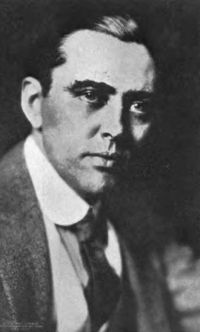
Julian Street

Julian Street

Summary

Portrait of Julian Street Julian Street Mysterious Japan

There will never be skyscrapers in Japan, or apartment buildings with families piled high in air. The family, not the individual, is the social unit of the land, and the private house is the symbol of the family. Even in the congested slums of Japanese cities, or in the quarters given over to the pitiful outcast class called eta, each family has its house, though the house may consist only of a single room no larger than a woodshed and may harbour an appalling number of people, as miserable and as crowded as those of the poorest slums in the United States.
Source: Gutenberg

Portrait of Julian Street Julian Street Mysterious Japan

No doubt our system, viewed from afar, looks as rosy to a Japanese girl as their system looks appalling to an American girl. Yet each has certain merits. The Japanese system does not suggest romance, it is true; but is romance, after all, the most essential stone in the foundation for a happy married life? Romantic notions figure too largely in some of our matches, and too little in some of theirs. And while the mature judgment of older people is with them the determining factor in the making of a match, it is too often with us no factor at all.
Source: Gutenberg

Portrait of Julian Street Julian Street Mysterious Japan

And behind the bamboo fence and the flowering hedge, stood a cherry tree in blossom.
It began to rain. In any other land I might have felt annoyance over so much rain as we were having. But not so in Japan. Japan could not look gloomy if it tried. Rain makes the landscape greener and the flowers fresher. It makes the coolies put on bristling capes of straw which shed the water as a bird's feathers do, and transform the wearer into a gigantic yellow porcupine. It makes the people leave off the little cotton shoes, called tabi, and go barefoot in their clogs.
Source: Gutenberg

Get perspective with Kwize: daily news enlightened by great literature