“ Much bowing began, in which Asako felt her disadvantage. The long lines of the kimono, with the big sash tied behind, lend themselves with peculiar grace to the squatting bow of Japanese intercourse. But Asako, in the short blue jacket of her tailor-made serge, felt that her attitude was that of the naughty little boys in English picture books, bending over for castigation.Mrs. Fujinami wore a perfectly plain kimono, blackish-brown in colour, with a plain gold sash. It is considered correct for middle-aged ladies in Japan to dress with modesty and reserve. ”
Kimono
Definition and stakes
The kimono, a traditional Japanese garment distinguished by its front-wrapping style and symbolic belt, has long functioned as a cultural symbol of identity and occasion. Authors such as John Paris and Hallie Erminie Rives illustrated its role in social customs, from the elegance of formal greetings to the liveliness of celebrations, while Geraldine Bonner and Anna Alice Chapin emphasized its visual and storytelling significance in daily life.
Dorothy Menpes and others examined its transformation, merging tradition with contemporary influences. Although its regular use has declined, the kimono continues to serve as an essential relic of Japanese heritage, its design and meaning persisting through literature and artistic expression.
Quotes about “kimono”
 Hallie Erminie Rives,
The Kingdom of Slender Swords
Hallie Erminie Rives,
The Kingdom of Slender Swords
“ It was densely crowded with people, each one of whom seemed to be carrying a colored paper-lantern or a cherry-branch drooped over the shoulder. In the hues of the loose, warm-weather kimono bloomed all the flowers of all the springs—golds and mauves and scarlets and magentas—and everywhere in the lantern-light fluttered radiant-winged children, like vivid little birds in a tropical forest. From tiny one-storied tea-houses along the way, with elevated mats covered with red flannel blankets, biwa and koto and samisen gurgled and fluted and tinkled. ”
 Geraldine Bonner,
Treasure and Trouble Therewith…
Geraldine Bonner,
Treasure and Trouble Therewith…
“ This was a litter of paint pots, hair pins, toilet articles, powder rags, across which, like a pair of strayed snakes, lay two long braids of black hair. A powerful scent of cosmetics and stale perfumery mingled with the faint, thrilling breath of roses.Seated in front of the glass in a soiled red satin kimono embroidered in storks, was Pancha Lopez, leading woman of the Albion. She was wiping off her make-up, a large jar of cold cream on the table before her, a grease rag in her hand. The kimono, falling richly, outlined a thin, lithe body, flat-backed, muscular and supple. ”



Related terms
Authors who wrote about “kimono”
Jukichi InouyeJohn ParisLucian Swift KirtlandAlice A. Parmelee MorrisJulia Dalrymple Eliza Ruhamah ScidmoreIsabel De Nyse ConoverHallie Erminie RivesDorothy Menpes
 Alice Mabel BaconJohn Finnemore
 Lafcadio Hearn
 Julian StreetVarious
 Isabella L. BirdGeraldine Bonner
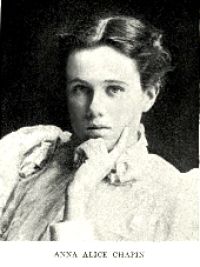 Anna Alice Chapin
 Franklin P. AdamsGrace James
 William Jennings Bryan
Eliza Ruhamah ScidmoreIsabel De Nyse ConoverHallie Erminie RivesDorothy MenpesAlice Mabel BaconJohn FinnemoreLafcadio HearnJulian StreetVariousIsabella L. BirdGeraldine BonnerAnna Alice ChapinFranklin P. AdamsGrace JamesWilliam Jennings Bryan