“ Why should clogs be despised? Much art has been expended on clogs. They have been made of lovely woods, and delicately inlaid with ivory, and with mother-of-pearl. A clog might be a dream of beauty, and, if not too high or too heavy, most comfortable also. But if there be any who do not like clogs, let them try some adaptation of the trouser of the Turkish lady, which is loose round the limb and tight at the ankle. ”
Clog
Definition and stakes
A clog, historically a wooden-soled shoe or protective outerwear, has fulfilled both practical and symbolic functions across cultures and eras. From Oscar Wilde’s celebration of clogs as “a dream of beauty” to A. J. Wilson’s depiction of their modest utility in rural labor, the theme highlights contrasts between artistry and austerity.
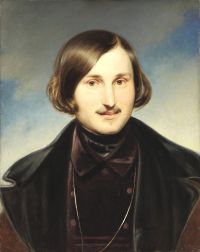
Eliza Ruhamah Scidmore evokes their rhythmic presence in Japanese landscapes, while Nikolai Gogol’s tales of a tattered cloak underscore how such garments can reflect social status or personal decline. These varied portrayals reveal clogs as objects that bridge the everyday and the metaphorical, embodying both burden and identity.
Quotes about “clog”
1911 Encyclopædia Britannica, Volume 12… (1911)
“ GOLOSH, or Galosh (from the Fr. galoche, Low Lat. calopedes, a wooden shoe or clog; an adaptation of the Gr. καλοπόδιον, a diminutive formed of κᾶλον, wood, and ποῦς, foot) , originally a wooden shoe or patten, or merely a wooden sole fastened to the foot by a strap or cord. In the middle ages “galosh” was a general term for a boot or shoe, particularly one with a wooden sole. In modern usage, it is an outer shoe worn in bad weather to protect the inner one, and keep the feet dry. ”
A. J. Wilson, The Life of Thomas Wanless, Peasant
“ So it came to pass that little Thomas Wanless was launched on the world at the early age of eight, at the age when the well-to-do begin to think of sending their children to school. Clad in a sort of blue smock and heavy clog boots; patched, not over-warm breeches and stockings, Thomas had to face the wintry blasts in the early morning, for it was a good mile walk to Whitbury Farm. There, all day long, he either trudged wearily by the sides of the horses at plough, often nearly frozen with cold, or did rough jobs about the cattle or pigs in the muck-littered farmyard. ”