“ It is in her native unconsidered gestures, as I have said, far more than in her studied poses, that the essential beauty of Liverpool is most perfectly revealed; and it is at night, when the aid of the sunlight is ended and the sky is a forgotten tale and even the stars are of as little moment as moths that palely flutter outside the windows of a lighted palace, that Liverpool becomes most elemental and instinctive. Abandoned by external nature, she becomes most natural, and therefore attains her most conspicuous beauty. ”
Liverpool
Definition and stakes
Liverpool, a port city in Merseyside, England, has long been a hub of commerce, culture, and history. From its 18th-century involvement in the transatlantic slave trade to its industrial peak in the 19th century, the city’s identity is marked by contrasts between prosperity and decline.
Authors like Dixon Scott praised its modest beauty and fundamental vitality, while William Dean Howells emphasized its architectural splendor. James Aspinall, contemplating its future, observed its lasting potential amid changing circumstances. These viewpoints converge on Liverpool as a city where practical functionality and artistic appeal coexist, shaped by its maritime heritage and persistent transformation.
Quotes about “Liverpool”
“ For Liverpool, in spite of herself, and quite unconsciously, is a place of exceeding beauty. Out of that hard turmoil of tangible interests and endeavours a very splendid and reassuring happening has sprung. In honest and shrewd response to instant necessities, the city has been carved and kneaded into the lean lines of practical effectiveness; and those lines have joined wonderfully together to make any number of unpremeditated glories. Loveliness has descended unawares. ”
Charles Bullard Fairbanks, My Unknown Chum: "Aguecheek"
“ Liverpool seems to be the gate to all the rest of the world. I almost fear to walk about lest I should find myself starting off, in a moment of temporary insanity, for Greenland's icy mountains, or India's coral strand. LONDON Dull must he be of soul who could make the journey from Liverpool to the metropolis in the month of June, and not be lifted above himself by the surpassing loveliness of dear mother Nature. ”
James Aspinall, Liverpool a few years since: by an old stager
“ And what of the future of Liverpool? Has she reached the meridian height of her glory and prosperity? or is she yet in her dawn and beginning? Shall we moralise upon the fate of Tyre, of Carthage, of Genoa, and Venice, and other marts of commerce in bygone days? It was not for such a purpose that we took up our pen. We do not aspire to be prophets. But as yet no cloud is in the sky. All is bright and clear above the horizon; all is fair, promising, hopeful. ”
William Dean Howells,
Seven English Cities
“ Liverpool is most worthy to be seen and known, and no one who looks up from the bacon and eggs of his first hotel breakfast after landing, and finds himself confronted by the coal-smoked Greek architecture of St. George’s Hall, can deny that it is of a singularly noble presence. The city has moments of failing in the promise of this classic edifice, but every now and then it reverts to it, and reminds the traveller that he is in a great modern metropolis of commerce by many other noble edifices. ”
“ It is in these natural and instinctive creations, frankly utilitarian, and not in her self-conscious trafficking with loveliness, that Liverpool grows most sensuously magnificent. A curve of sunless canal with clustered chimneys rising solemnly about; a pit of railway sidings, warehouses ranged round, one proud white plume of smoke moving slowly across it; long glittering reaches at the Docks; a black stretch of suburb crawling out, myriad-speared, across the sunset; a mass of warehouses blotting out the stars; hot vistas in the markets, ripe and fierce with colour ”
“ Deliberately majestical here, gravely featureless in Tithebarn Street, elegant from the Central, Liverpool achieves within the last of her four porticoes an order of effects more urgent and memorable still. For it is behind the Landing Stage that many of the car routes of the City terminate, and the great space of unshadowed roadway, empty of all buildings save the new-sprung Dock Offices, is really a brave platform on which the cars endlessly wheel and interlace. ”
Charles M. Taylor, Odd Bits of Travel with Brush and Camera
“ A stroll through the streets and byways of Liverpool at night is a sad but interesting experience. Alas for the misery and crime and want that exist in all the great cities! Girls, young and pretty, but no longer innocent, may be seen in scores in every locality: children with poverty and depravity written on their faces boldly address one at the street corners: men and women, with sharp, pinched features and misery and despair in their voices, beseech one for alms, or with fierce cunning lie in wait for the unwary. ”
James Stonehouse, Recollections of Old Liverpool
“ Scarcely a town by the margin of the ocean could be more salt in its people than the men of Liverpool of the last century: so barbarous were they in their amusements, bull-baitings and cock and dog-fightings, and pugilistic encounters. What could we expect when we opened no book to the young, and employed no means of imparting knowledge to the old?—deriving our prosperity from two great sources—the slave-trade and privateering. ”
Robert Ornsby, Memoirs of James Robert Hope-Scott…
“ Liverpool is the Liverpool of India, of China, of Africa, of North and South America, of Australia—the Liverpool of the whole habitable globe; and she has her features of distinction; she has her habits of thought and feeling, her traditions of mind fostered by influences such as these. There she sits upon the Mersey, a sort of queen of the seas; and Manchester, her sister, looks at her and loves her not. She too is great, and she too is powerful—but she is not Liverpool, and she cannot become Liverpool. At Liverpool she is lost in the throng of nations and the multitude of commerce ”
Winston Churchill, A Far Country — Complete
“ The sight of mist-ridden Liverpool is not a cheering one for the American who first puts foot on the mother country's soil, a Liverpool of yellow-browns and dingy blacks, of tilted funnels pouring out smoke into an atmosphere already charged with it. ”
“ And this is, after all, to say little more than that Liverpool possesses in deep measure that strange accidental beauty of the modern city which is a thing so new to the world that the arts have not yet learned to teach men how to enjoy it. But in Liverpool (exceptional, once more, because typical, typical because exceptional) that beauty exists in a state of singular purity. ”
Sir William Bower Forwood, Recollections of a Busy Life: Being the Reminiscences of a Liverpool Merchant 1840-1910
“ Fashionable Liverpool still dwelt in the large Georgian houses fringing Everton Hill, which looked down upon one of the loveliest views imaginable. In the foreground were the trees and woods which ran along what is now Netherfield Road; beyond these the river flowed; in the distance the Wirral peninsula stretched out, backed by the Welsh hills. But the town of Liverpool was pushing its way up to Everton, and San Domingo Road was ceasing to be fashionable; while Aigburth, Prince's Park, and Edge Lane were rapidly becoming the most popular suburbs of the fast-rising seaport. ”
L. T. Meade,
A Girl of the People
“ Liverpool to him is another London, but without London's attractions. But the true Liverpool man looks at his native town from a very different point of view. He is part and parcel of the place, and he loves it for its size and ugliness, its great commerce, its thriving active business life. Liverpool to its citizens means home; they are proud of their laws and their customs; they like to dispense charity in their own way; they like to support and help their own poor ”
Sir William Bower Forwood, Recollections of a Busy Life: Being the Reminiscences of a Liverpool Merchant 1840-1910
“ Events move so rapidly, the men and circumstances of to-day are crowded out and their memory obliterated in the new interests of tomorrow, that no man's work or influence can be said to have exercised more than an evanescent power; yet Liverpool has been built up—its commerce, its municipality, and its charitable and philanthropic work—by leaders of men who have found their work lying at their hand and have done it, and have done it well. ”
John C. Hutcheson, Caught in a Trap
“ Liverpool it is like, with its muddy Seine—like the other river that runs between Birkenhead and its sister city—and its bustling streets and quays. Liverpool, with a touch of Ratcliffe Highway, on account of the parrots and foreign birds, mostly South American, that you see troops of sailors marching about with, besides the strong touch of the military element which one more frequently observes by the side of Tower Hill, than in the parallel city of trade in Lancashire. ”
James Russell Lowell,
American ideas for English readers
(1892)
“ Formerly Bristol was the great port through which intercourse with America was kept up, but now certainly Liverpool is one end of the three-thousand-mile loom on which the shuttles which are binding us all in visible ties more and more together are continually shooting to and fro. Liverpool is also the gate by which Americans leave the Old World to go home, and I am to a certain extent, as a person who crosses the seas not infrequently, interested in a discussion which I saw in the newspapers the other day as to the difficulties of embarcation at Liverpool. ”
W. Y. Morgan,
A Journey of a Jayhawker
“ Liverpool is a good deal like a big American city. A hundred years ago it was a small town, but by taking the lead in American trade it has become the most important port of Great Britain, and, counting suburbs, has nearly a million population. Its harbor is a deep river, the Mersey, and the banks are solid walls of wharves, docks and wholesale buildings. It is a relief to strike a town where you go to see bridges and factories instead of churches and art galleries. Liverpool is a good place in which to taper off from the old and the curious to the useful and the active. ”
Sir William Bower Forwood, Recollections of a Busy Life: Being the Reminiscences of a Liverpool Merchant 1840-1910
“ It is justly esteemed and valued by distinguished statesmen and philanthropists, and not less by successful soldiers who in the hour of their country's great anxiety have turned defeat into victory. How much more, then, must I prize it, the freedom of my native city, as one born in Liverpool, and who has spent his life in your midst, and whose only claim to this great honour is that he has endeavoured to be of some use to his fellow-citizens. ”
Washington Irving,
The Sketch-Book of Geoffrey Crayon
“ Like his own Lorenzo de’ Medici, on whom he seems to have fixed his eye, as on a pure model of antiquity, he has interwoven the history of his life with the history of his native town, and has made the foundations of his fame the monuments of his virtues. Wherever you go, in Liverpool, you perceive traces of his footsteps in all that is elegant and liberal. He found the tide of wealth flowing merely in the channels of traffic; he has diverted from it invigorating rills to refresh the garden of literature. ”
“ Half of Liverpool uses it as a matter of business, the other half as a matter of health and pleasure, and it presents all day long the appearance of a democratic promenade. It is, in fact, the finest of Liverpool’s parks, furnished with its sheet of water, provided with its cafés, its bookstalls, its seats. Merchants and clerks from the contiguous bone-part of the fan slip down here at lunch-time, mothers bring their children from the recesses of the suburban plume. The actual people of Liverpool are here at last to be seen in vital conjunction with the weapon they employ. ”
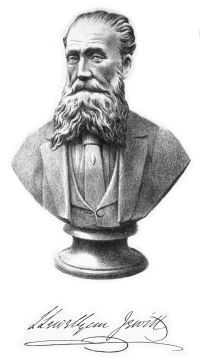
Llewellynn Frederick William Jewitt,
The ceramic art of Great Britain from pre-historic times down to the present day…
(1878)
“ It would, perhaps, scarcely be expected that in such a busy, bustling, and gigantic place of enterprise and commercial activity as Liverpool—in the midst of shipping of every description, and surrounded by the most enormous and busy undertakings of one kind or other—we should successfully look for the full and perfect accomplishment of so quiet, so unostentatious, so peaceful, and so delicate an art as that of the potter. ”
“ Liverpool becomes, quite frankly, an almost pure product of the nineteenth century, a place empty of memorials, a mere jungle of modern civic apparatus. Its people are people who have been precipitately gathered together from north, from south, from overseas, by a sudden impetuous call. ”
Various, Blackwood's Edinburgh Magazine…
“ Can it encourage the trade of such a town as Dangley or Standon to know, that the five or six thousand beings who are whirled past them, with almost invisible rapidity, every day, arrive in Liverpool in ten hours after leaving London? ”
Sir William Bower Forwood, Reminiscences of a Liverpool Shipowner…
“ We want a wider outlook, and a more generous appreciation of the fact that Liverpool depends upon her commerce. Every expenditure which the city has made in the past upon its development has resulted not only in its growth and prosperity, but in the well-being of her people. ”
Sir William Bower Forwood, Recollections of a Busy Life: Being the Reminiscences of a Liverpool Merchant 1840-1910
“ The honorary freedom of the city of Liverpool, guarded by this Council with so much jealousy, and bestowed with such a frugal hand, is the greatest honour which this city can confer—it is a unique order of merit, it is not conferred by the favour of a monarch or minister, but by the spontaneous and unanimous voice of a great representative assembly, and as such is not surpassed by any similar order in this country. ”
Adeline Trafton,
An American Girl Abroad
“ It is not beautiful, this great city of Liverpool, creeping up from the sea. It has little to interest a stranger aside from its magnificent docks and warehouses. [31] There are mammoth truck horses from Suffolk, with feet like cart wheels; there is St. George's Hall, the pride of the people, standing in the busy square of the same name, with a statue of the saint himself—a terror to all dragons—just before it. ”
James Stonehouse, Recollections of Old Liverpool
“ From the balcony of that house, wherein the utmost hospitality was always exercised, the great statesmen who have represented Liverpool in Parliament—George Canning and William Huskisson—have many a time poured forth the floods of their eloquence, p. 75stirring up the heart’s-blood of the thousands assembled in the street to hear them, making pulses beat quicker, and exciting passions to fever-heat. ”
Sir William Bower Forwood, Recollections of a Busy Life: Being the Reminiscences of a Liverpool Merchant 1840-1910
“ It may lack the glamour and prestige of the Imperial Parliament, but it has this great advantage: the City Council affords greater opportunities of initiating and carrying into effect measures for the benefit of the people among whom we live, and we have the added advantage of seeing the growth and fruition of our work. Who can compare the Liverpool of to-day with the Liverpool of thirty years ago without feeling thankful for what has been done, and proud that he has been privileged to take part in the doing of it? ”
Sir William Bower Forwood, Recollections of a Busy Life: Being the Reminiscences of a Liverpool Merchant 1840-1910
“ In no department of Liverpool life has more distinct progress been made than in its social regeneration. Liverpool was always liberal and generous in her charities, but there was an absence of enlightenment in her municipal administration, and an utter failure to realise the social degradation in which so many of her people lived; her streets in the 'sixties were not fit places for respectable people after dark, while the neighbourhood of the Sailors' Home at all times of the day was a place to be avoided. Liverpool was known as the "black spot" on the Mersey, and well earned that title. ”
King of Great Britain Edward VII, Speeches and Addresses of H. R. H. the Prince of Wales…
“ As for myself, this is not my first visit to Liverpool, and I hope by no means it may be my last. I have always been received here with the greatest kindness, and I have always looked back to my different visits with the greatest pleasure and satisfaction. The fact that 100 years ago this town numbered only 40,000 people, and now, with its suburbs, numbers close upon 700,000, speaks for its prosperity. Most cordially do I propose this toast, Mr. Mayor, and most sincerely do I wish long life to you, and prosperity to your town. ”
active 1825 James Drake, Drake's Road Book of the Grand Junction Railway
“ Liverpool is an ancient sea-port, borough, and market town, 205 miles from London, containing 205,964 inhabitants, exclusive of 10,000 seamen.Of its remote antiquity but little can be asserted, amidst the great contrariety of opinion which is held on this subject. Liverpool is not noticed in any of the Roman Itinera, neither does the name occur in the Norman survey. After the conquest it was granted by William, to Roger de Poictiers, together with all the land between the Ribble and the Mersey, and subsequently forfeited. ”
James Stonehouse, Recollections of Old Liverpool
“ From the age of these houses, the quantity of timber in them, the narrowness of the streets, and the absence of a copious supply of water, I am sure Liverpool would have been half consumed if a wind had sprung up. I thought the building looked like a great funeral pile as the flames roared out on all sides. It was a grand, yet dreadful sight. The whole of Castle-street was occupied by people, although, from the position of the Exchange, a full front view could not be obtained, it being almost parallel with the west side of Castle-street. ”