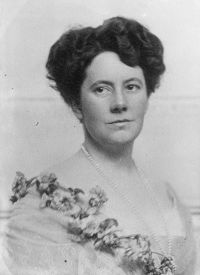
Isabel Anderson

Isabel Anderson

Summary

Portrait of Isabel Anderson Isabel Anderson The Spell of Japan

I imagine the priests sitting on the little covered wooden bridge gazing into the calm water with the lotus flowers, while the crickets sing in the silence—crickets who were perhaps once human, now doing penance for their sins. I hear the priests murmur over and over Namu Amida Butsu, the Japanese rendering of the Sanskrit invocation meaning "Hail to the Eternal Splendour of Buddha!" I see them meditating on the unending life that they believe to be in store for them, until evil shall have left them, and they shall be absorbed into Nirvana, "as a dewdrop sinks into the shining sea."
Source: Gutenberg

Portrait of Isabel Anderson Isabel Anderson The Spell of Japan

AT every turn of the head the artist in Japan discerns a picture that delights his eye—a quaint little figure dressed in bright colours standing by a twisted tree, a fantastic gateway through which he sees a miniature garden, or the curving roof of a temple, half hidden among the trees.
As architecture is always more or less affected by climate, the Japanese, in their land of earthquakes and typhoons, have put up low wooden structures, using cedar or fir principally, because they are plentiful.
Source: Gutenberg

Portrait of Isabel Anderson Isabel Anderson The Spell of Japan

After our brief stay in Seoul we bade farewell to the Colonies and turned our faces toward the Land of the Rising Sun itself, making the crossing from Chosen to Shimonoseki in a single night. This is far pleasanter than the passage from Vladivostok, which requires several days. In order to attract travellers, the Japanese have put their best cars and boats on this route. Our last glimpse of the Hermit Kingdom was a picture of jagged peaks rising in lofty precipices from a moonlit sea, their black masses outlined in solemn grandeur against the heavens.
Source: Gutenberg

Get perspective with Kwize: daily news enlightened by great literature