Jacques Hébert

Definition and stakes

1911 Encyclopædia Britannica, Volume 13… (1911)

HÉBERT, JACQUES RENÉ (1757–1794) , French Revolutionist, called “Père Duchesne,” from the newspaper he edited, was born at Alençon, on the 15th of November 1757, where his father, who kept a goldsmith’s shop, had held some municipal office. His family was ruined, however, by a lawsuit while he was still young, and Hébert came to Paris, where in his struggle against poverty he endured great hardships
Source: Wikisource

A Marriage Under the Terror

Next moment Hébert was aware of some one, under-sized and shrivelled looking, who whirled tempestuously upon him, with an amazing flow of words.
"Oh, my Ste. Géneviève! And is a young girl not to walk unmolested to her home. Bandit! assassin! tyrant! pig! devil! species of animal, go then—but on the instant—and take that, and that, to remember an honest woman by,"—the first "that" being a piece of his hair torn forcibly out, and thrown into his perspiring face, and the second, a most superlative slap on the opposite cheek.
Source: Gutenberg

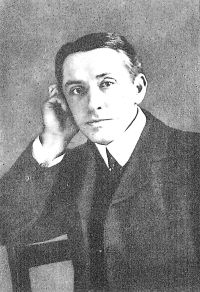
Portrait of Algernon Blackwood Algernon Blackwood Day and Night Stories

Though born into an artificial social clique that made it difficult, Heber had always loved the simple things. Nature, especially, meant much to him. He would rather see a woodland misty with bluebells than all the châteaux on the Loire; the thought of a mountain valley in the dawn made his feet lonely in the grandest houses. Yet in these very houses was his home established. Not that he under-estimated worldly things—their value was too obvious—but that it was another thing he wanted. Only he did not know precisely what he wanted until this particular idiot made it plain.
Source: Gutenberg

Get perspective with Kwize: daily news enlightened by great literature