“ Calabria is not a land to traverse alone. It is too wistful and stricken; too deficient in those externals that conduce to comfort. Its charms do not appeal to the eye of romance, and the man who would perambulate Magna Graecia as he does the Alps would soon regret his choice. One needs something of that “human element” which delighted the genteel photographer of Morano—comrades, in short; if only those sages, like old Nola Molisi, who have fallen under the spell of its ancient glories. The joys of Calabria are not to be bought, like those of Switzerland, for gold. ”
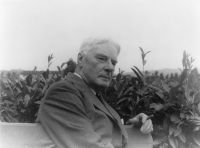
Norman Douglas
Summary
Published in 1915, Norman Douglas’s Old Calabria is a travel narrative that explores the rugged landscapes and complex allure of southern Italy’s Calabria region. Merging vivid depictions of natural beauty with reflections on local culture, the text examines themes of malaria, outlaws, and historical legacies, ranging from ancient Pythagorean conflicts to the tenacity of rural life.
Through interactions with monks, villagers, and the region’s evocative scenery, Douglas contrasts Calabria’s “wistful” charm with its difficulties, portraying it as a land where human effort meets nature’s indifference. The work captures a bygone era, in which the interplay of myth, adversity, and enduring tradition shapes the region’s character.
Quotes from Old Calabria (Norman Douglas)
“ In olden days all this country was full of game; bears, stags and fallow-deer are mentioned. Only wolves and a few roe-deer are now left. The forest is sombre, but not gloomy, and one would like to spend some time in these wooded regions, so rare in Italy, and to study their life and character—but how set about it? The distances are great; there are no houses, not even a shepherd’s hut or a cave; the cold at night is severe, and even in the height of midsummer one must be prepared for spells of mist and rain. ”
“ Afterwards I reposed awhile in the upper regions, under an olive, and looked down towards the valley of the Neto, which flows not far from here into the Ionian. I thought upon Theocritus, trying to picture this vale of Neaithos as it appeared to him and his shepherds. The woodlands are gone, and the rains of winter, streaming down the earthen slopes, have remodelled the whole face of the country. Yet, be nature what it may, men will always turn to one who sings so melodiously of eternal verities—of those human tasks and needs which no lapse of years can change. ”
