“ Yonder he lived, with his physician, his electric organ, and his collection of glass, behind the pillars, the bow windows, and the chiselled festoons of the schloss which had risen from its ruins at a nod from him. He was hardly ever seen: he was always in bed with poultices. But people saw his daughter, that curious creature with the whimsical features who lived like a princess, had a countess for a companion, studied algebra, and had walked in a temper unimpeded right through the guard. People saw her, and they sometimes saw Prince Klaus Heinrich at her side. ”
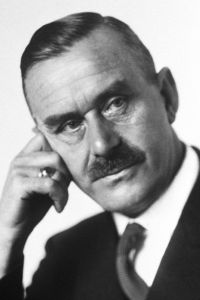
Thomas Mann
Summary

"Royal Highness" (1909), Thomas Mann's second novel, merges fairy-tale beauty with social realism, following the journey of Prince Klaus Heinrich, a dreamy aristocrat, and Imma Spoelmann, a spirited commoner, as their arranged marriage gradually transforms into a harmonious partnership. Written between 1906 and 1909, the novel reflects Mann’s personal romantic experiences and delves into themes of honor, class, and the tension between idealism and the real world.
Set in lavish yet realistic locations such as the Schloss and Delphinenort, it contrasts the strict confines of privilege with the energy of ordinary life, ultimately celebrating love’s ability to bring about change. Though its critical reception was mixed, the novel was praised for its vivid depiction of a society in transition.
Quotes from Royal Highness (Thomas Mann)
“ And when March and April had passed, May came, bringing the great event of Klaus Heinrich's and Imma's marriage. It was a glorious day, with golden clouds in the sky, and its dawn was greeted by a choir from the town-hall tower. The people streamed in on foot and in carts, that fair, thick-set, healthy, reliable stock with blue, meditative eyes and broad, high cheek-bones, dressed in the handsome national dress—the men in red jackets, top-boots, and broad-brimmed black-velvet hats, the women in brightly embroidered bodices, thick, wide skirts, and big black veils as a head-dress. ”
Thomas Mann,
Royal Highness
(1916)
“ Behind the glass and gilded window-frames sat Imma Spoelmann in veil and wreath, with an old Court lady as lady of honour at her side. Her dress of shimmering silk glittered like snow in the sunshine, and on her lap she held the white bouquet which Prince Klaus Heinrich had sent her an hour before. Her strangely childlike face was as pale as an ocean-pearl, and a smooth wisp of dark hair fell across her forehead under the veil, while her big black eyes threw glances of pleading eloquence over the close-packed throng. ”
