Epicycle

Definition and stakes

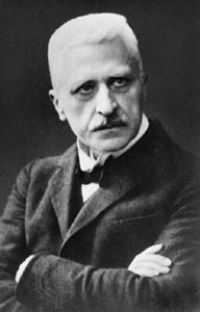
Portrait of John Louis Emil Dreyer John Louis Emil Dreyer,  Tycho Brahe: a picture of scientific life and work in the sixteenth century (1890)

“ He merely let the centre of the first epicycle oscillate (librate) backwards and forwards on the deferent to the extent of 40′.5 on each side of its mean position, the latter moving along the deferent with the moon's mean motion in anomaly, and the centre of the epicycle being in its mean position at the syzygies and quadratures, and farthest from it at the octants, the period of a complete libration being half a synodical revelation. ”
Source: Wikisource

W. H. Davenport Adams,  Everyday Objects; Or, Picturesque Aspects of Natural History

“ Here A B G D represent the ecliptic, E its centre, and A E G its diameter; Z H T K is the epicycle, in which the planet moves uniformly around the [299] centre A, while the epicycle uniformly traverses the circle A B G D. Now, suppose that the star has arrived at H; it would appear to an observer at E to be more advanced by the uniform movement of all the arc A H; if it be at K, it would appear, on the contrary, to be less advanced by all the arc A K. At Z the star would appear more distant, and at T, nearer than if it were at A. ”
Source: Gutenberg

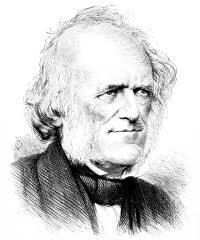
Portrait of William Whewell William Whewell,  Novum organon renovatum (1858)

“ As soon as the leading term of a new theory has been pronounced and understood, all the phenomena change their aspect. There is a standard to which we cannot help referring them. We cannot fall back into the helpless and bewildered state in which we gazed at them when we possessed no principle which gave them unity. Eclipses arrive in mysterious confusion: the notion of a Cycle dispels the mystery. The Planets perform a tangled and mazy dance; but Epicycles reduce the maze to order. The Epicycles themselves run into confusion; the conception of an Ellipse makes all clear and simple. ”
Source: Gutenberg

Get perspective with Kwize: daily news enlightened by great literature