Diagonal

Definition and stakes

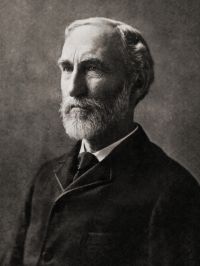
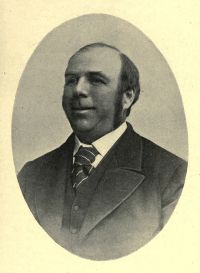
Portrait of Henry Ernest Dudeney Henry Ernest Dudeney,  The Canterbury Puzzles, and Other Curious Problems

“ Again, we can never measure exactly in numbers the diagonal of a square. If you have a window pane exactly a foot on every side, there is the distance from corner to corner staring you in the face, yet you can never say in exact numbers what is the length of that diagonal. The simple person will at once suggest that we might take our diagonal first, say an exact foot, and then construct our square. ”
Source: Gutenberg

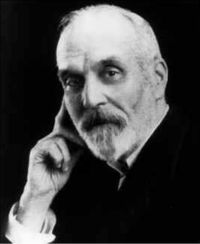
Portrait of John Ayrton Paris John Ayrton Paris,  Philosophy in Sport Made Science in Earnest

“ Seymour, “that the composition of forces must always be attended with loss of power; since the diagonal of a parallelogram can never, under any circumstances, be equal to two of its sides? and is it not also evident, that the length of the diagonal must diminish as the angles of the sides increase: so that the more acute the angle at which the forces act, the less must be the loss by composition? But I shall be better able to explain this law by a diagram. ”
Source: Gutenberg

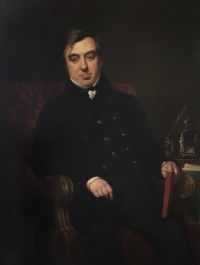
Portrait of Albrecht Dürer Albrecht Dürer,  Of the Just Shaping of Letters

“ X you shall construct from I. Append from top angle to the right a diagonally set square, as you did before in R; and at the bottom draw an acute tail to the left from the diagonal, and at the middle of the vertical limb describe a transverse, in such way that the former is cut before and aft by the latter's diagonal; let the hither and lower angle be terminated as far in front of the upright as would measure one-half of the cutting diagonal, which at top shall just touch the upright; but to the right let the transverse at top project to a point just below the angle of the oblique square ”
Source: Gutenberg

Get perspective with Kwize: daily news enlightened by great literature