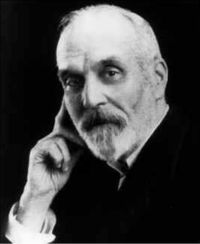
The chessboard, a 64-square checkered grid, serves as the foundational arena for the game of chess, with its alternating light and dark squares shaping strategy and movement. Authors have long imbued it with symbolic depth: Huxley likened it to the universe governed by natural laws, while James saw it as a stage for human passions.
Benson evoked its metaphorical vastness, framing individuals as pawns in a grand, unseen game. Dudeney, meanwhile, dissected its geometric utility in puzzles, highlighting its role beyond mere play. These varied perspectives underscore the chessboard’s dual identity—as both a structured game tool and a canvas for existential and intellectual exploration.
 Thomas Henry Huxley,
Autobiography and Selected Essays
Thomas Henry Huxley,
Autobiography and Selected Essays