Rhombus

Definition and stakes

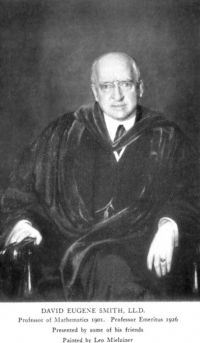
Portrait of David Eugene Smith David Eugene Smith,  The Teaching of Geometry

“ Thus we are more apt to-day to omit the oblong and rhomboid as unnecessary, and to define "rhombus" in such a manner as to include a square. We use "parallelogram" to cover "rhomboid," "rhombus," "oblong," and "square." For "oblong" we use "rectangle," letting it include square. Euclid's definition of "square" [Pg 149] illustrates his freedom in stating more attributes than are necessary, in order to make sure that the concept is clear; for he might have said that it "is that which is equilateral and has one right angle." We may profit by his method, sacrificing logic to educational necessity. ”

Source: Gutenberg

Portrait of Mary Tyler Peabody Mann Mary Tyler Peabody Mann,  Guide to the Kindergarten and Intermediate Class…

“ Are all squares similar? are all squares equal? are all triangles equal? are all triangles similar? What is the difference between a square and oblong? What is the difference between a square and a triangle? What is the difference between a square and a rhombus? What kind of corners has a rhombus? In what is a square like a rhombus? How do you describe a triangle? What is the name of the triangles you have learnt about? They will answer right-angled, equal-legged triangles. Then give them each a hexagon, and ask them what kind of corners it has? Whether any one is more blunt than another? ”
Source: Gutenberg

Proclus,  The philosophical and mathematical commentaries of Proclus on the first book of Euclid's elements… (1791)

“ For if you conceive a quadrangle or an oblong, having its sides drawn in such a manner, that while two of its opposite angles are dilated, the other two are contracted; then the dilated angles will appear obtuse, and the contracted, acute. And the appellation of rhombus [182] seems to have been imposed from motion. For if you conceive a quadrangle moving after the manner of a rhombus, it will appear to you changed in order, according to its angles: just as if a circle is moved after the manner of a sling, it will immediately exhibit the appearance of an ellipsis. ”
Source: Gutenberg

Get perspective with Kwize: daily news enlightened by great literature