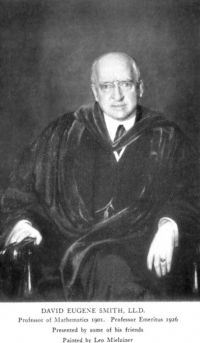
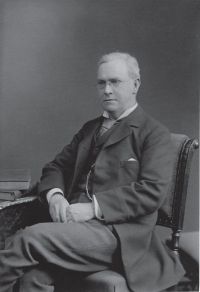
Charles Everitt, Olaus Henrici, Edwin B. Elliott, John H. Grace, Bertrand A. W. Russell and Alfred N. Whitehead, 1911 Encyclopædia Britannica (1911)
“ Next this parallelogram is transformed into another parallelogram, which has one of its sides equal to a given straight line, whilst its angles remain unaltered. This may be done by aid of the theorem in Prop. 43. The complements of the parallelograms which are about the diameter of any parallelogram are equal to one another. Thus the problem (Prop. 44) is solved to construct a parallelogram on a given line, which is equal in area to a given triangle, and which has one angle equal to a given angle (generally a right angle) . ”