Tianjin

Definition and stakes

1911 Encyclopædia Britannica, Volume 26… (1911)

“ The importance of Tientsin has been enhanced by the railways connecting it with Peking on the one hand and with Shanhai-kwan and Manchuria on the other. The British concession, in which the trade centres, is situated on the right bank of the river Peiho below the native city, and occupies some 200 acres. It is held on a lease in perpetuity granted by the Chinese government to the British Crown, which sublets plots to private owners in the same way as is done at Hankow. The local management is entrusted to a municipal council organized on lines similar to those which obtain at Shanghai. ”
Source: Wikisource

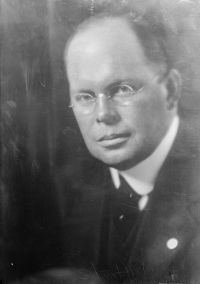
Portrait of Samuel Merwin Samuel Merwin,  Drugging a Nation: The Story of China and the Opium Curse

“ Tientsin, then, like Shanghai, is a potent, an electric, force in its influence on China. Whatever the Chinese are to become in their struggle towards the light of day will be in some measure due to the example set by these two cities, the only samples of Western civilization which the Chinaman can scrutinize at close range. The missionary tells him of the God of the Western peoples, and of how His Spirit regenerates humankind; the Chinaman listens stolidly, and then turns to look at the samples of regenerated peoples that fringe his Coast. ”
Source: Gutenberg

| editor,  Twentieth Century Impressions of Hongkong… (1908)

“ Lying at the junction of the Grand Canal with the Pei-ho, Tientsin is distant some 80 miles from Peking. The country is flat and uninteresting, and practically the whole of the city is built on raised land. The many waterways with which it is surrounded are, for the most part, of a dirty yellow appearance, and certainly do not add to the attractiveness of the district, but their importance as a means of communication, and the influence they have had on the trade of the port, cannot be over-estimated. The climate is one of extremes. ”
Source: Wikisource

Get perspective with Kwize: daily news enlightened by great literature