Summary

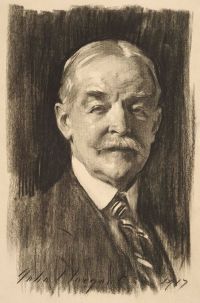
Portrait of Denman W. Ross Denman W. Ross A theory of pure design: harmony…

The possibility of Pure Design, pure Art, followed for the sake of Order and Beauty, with no purpose of service or of utility, is not at all understood or appreciated. I think of Pure Design as I think of Music. Music is the arrangement and composition of sounds for the sake of Order and Beauty, to give pleasure to the ear of the composer. Pure Design is the arrangement and composition of lines and spots of paint for the sake of Order and Beauty, to give pleasure to the eye of the designer.
Source: Gutenberg

Portrait of Denman W. Ross Denman W. Ross A theory of pure design: harmony…

The method of study should be a combination of analysis with synthetic reproduction. Taking any instance of Order, whether in Nature or in some work of Art, the first thing to do is to consider its terms,—its positions, its lines, its areas, its measure and space-relations, its tones and tone-relations,—bringing every element to separate and exact definition. The next thing to do is to note every occurrence of Harmony, of Balance, of Rhythm,—every connection making for consistency, unity, Order.
Source: Gutenberg

Portrait of Denman W. Ross Denman W. Ross A theory of pure design: harmony…

The mixture of Vermilion and Rose Madder, for example, gives us a Red of great intensity. That is about the strongest Red which we are able to produce with the pigment-materials which we use. Intensity must not be confounded with value nor value with intensity. By value I mean more or less light. By intensity I mean a great purity and brilliancy of color. Intensity stands in opposition to neutrality, in which no color can be distinguished. The more color we have in any tone the more intensity we have. The less the intensity the less color, and the absence of color means neutrality or grayness.
Source: Gutenberg

Get perspective with Kwize: daily news enlightened by great literature