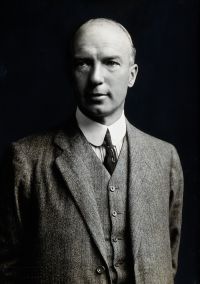
Charles Everitt

Biographical details

Charles Everitt,  1911 Encyclopædia Britannica, Volume 6… (1911)

“ To the physicist matter is presented in three leading forms—solids, liquids and gases; and although further subdivisions have been rendered necessary with the growth of knowledge the same principle is retained, namely, a classification based on properties having no relation to composition. The fundamental chemical classification of matter, on the other hand, recognizes two groups of substances, namely, elements, which are substances not admitting of analysis into other substances, and compounds, which do admit of analysis into simpler substances and also of synthesis from simpler substances. ”
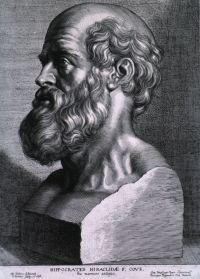
Source: Wikisource

Charles Everitt,  1911 Encyclopædia Britannica, Volume 4… (1911)

“ This aphorism implies that not every patient with a broken knee-cap is suited for the opening of his knee-joint, or even for the subcutaneous adjustment of the broken fragments. An operative procedure which is admirably suited for one patient might result in disaster when adopted for another, and it is an important part of the surgeon’s business to know what to advise in each individual case. ”
Source: Wikisource

Charles Everitt,  1911 Encyclopædia Britannica, Volume 6… (1911)

“ All observations were the result of accident or chance, or possibly in some cases of experimental trial, but there is no record of a theory or even a general classification of the phenomena involved, although there is no doubt that the ancients had a fair knowledge of the properties and uses of the commoner substances. The origin of chemistry is intimately bound up with the arts which we have indicated; in this respect it is essentially an experimental science. A unifying principle of chemical and physical changes was provided by metaphysical conceptions of the structure of matter. ”
Source: Wikisource

Get perspective with Kwize: daily news enlightened by great literature