Staphylococcus

Definition and stakes

Sinclair Lewis,  Arrowsmith (1925)

“ That morning Martin had isolated a new strain of staphylococcus bacteria from the gluteal carbuncle of a patient in the Lower Manhattan Hospital, a carbuncle which was healing with unusual rapidity. He had placed a bit of the pus in broth and incubated it. In eight hours a good growth of bacteria had appeared. Before going wearily home he had returned the flask to the incubator. ”

Source: Wikisource

Alexander Miles,  Manual of Surgery Volume First…

“ There is evidence that a mixed infection—that is, the introduction of more than one species of organism, for example, the tubercle bacillus and a pyogenic staphylococcus—increases the severity of the resulting disease. If one of the varieties gain the ascendancy, the poisons produced by the others so devitalise the tissue cells, and diminish their power of resistance, that the virulence of the most active organisms is increased. ”
Source: Gutenberg

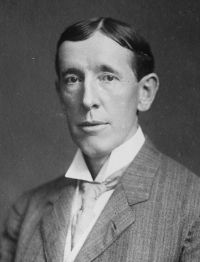
Portrait of Sir George Newman Sir George Newman,  Bacteria

“ The Staphylococcus cereus albus and S. cereus flavus are slightly modified forms of the S. pyogenes aureus, and are differentiated from it by being non-liquefying. They produce a wax-like growth on gelatine.
Staphylococcus pyogenes aureus, the type of the family, is grown in all ordinary media at room temperature, though more rapidly at 37° C. Liquefaction sets in at a comparatively early date, and subsequently we have in the gelatine test-tube cultures a flocculent deposit of a bright yellow amorphous mass, and in gelatine plates small depressions of liquefaction with a yellow deposit.
”
Source: Gutenberg

Get perspective with Kwize: daily news enlightened by great literature