Bacillus

Definition and stakes

Louis Dechmann,  Valere Aude: Dare to Be Healthy…

“ Since the discovery of the bacillus or microbe, which in varied form accompanies nearly every variety of disease, it has become a dogma of the at present dominant school of medicine that the various bacilli are the actual causes of the different varieties of disease, and the tendency has been to find some poison that would kill the bacilli in order to heal the disease.
The truth is that the bacillus is not the cause, but the effect of disease; in fact is nothing but another consequence or symptom of a specific form of disease.
”
Source: Gutenberg

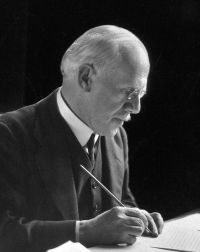
Portrait of Sir George Newman Sir George Newman,  Bacteria

“ The bacillus was first detected in the blood of patients suffering from the disease. It takes the form of a small, round-ended, oval cell, with marked polar staining, and hence having an appearance not unlike a diplococcus. In the middle there is a clear interspace, and the whole is surrounded with a thick capsule, stained only with difficulty. The organisms are often linked together in pairs or even chains, and exhibit involution forms. In culture the bacillus is even more coccal in form than in the body. ”
Source: Gutenberg

Portrait of Sir George Newman Sir George Newman,  Bacteria

“ The disease ends fatally in two or three days.
Slight injuries to the surface of the skin or mucous membrane are sufficient for the introduction of the causal bacillus. This organism is, like tetanus, an anaërobe, existing172 in the superficial layers of the soil. From its habitat it readily gains entrance to animal tissues. It has spores, but though they are of greater diameter than the bacillus itself they are not absolutely terminal. Hence they merely swell out the capsule of the bacillus, and produce a club-shaped rod. They form gas while growing in the tissues and in artificial culture.
”
Source: Gutenberg

Get perspective with Kwize: daily news enlightened by great literature