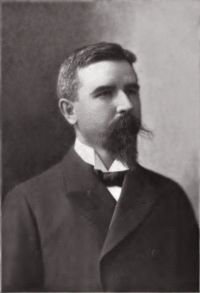
R. H. Chittenden

R. H. Chittenden

Summary

Portrait of R. H. Chittenden R. H. Chittenden On Digestive Proteolysis

One cannot fail to be impressed with the resemblance in functional power between the unformed ferments as a class and cell-protoplasm. To what can we ascribe the particular functional power of each individual ferment? Why, for example, does pepsin act on proteid matter only in the presence of acid, and trypsin to advantage only in the presence of alkalies? Why does pepsin act only on proteid matter, and ptyalin only on starch and dextrins? Why does trypsin produce a different set of soluble products in the digestion of albumin than pepsin does?
Source: Gutenberg

Portrait of R. H. Chittenden R. H. Chittenden On Digestive Proteolysis

In pancreatic digestion, proteids are exposed to the action of an enzyme of much greater power than pepsin, one endowed with a far greater range of activity, and consequently proteolysis as it occurs in the small intestine becomes a broader and more complicated process. As you well know, the ferment trypsin manifests its power not only in a more rapid transformation of insoluble proteids into soluble and diffusible products, but there is a diversity in the character of the many products formed which testifies to the profound alterations this ferment is capable of producing.
Source: Gutenberg

Portrait of R. H. Chittenden R. H. Chittenden On Digestive Proteolysis

Furthermore, in considering absorption as it occurs in the living stomach, we must necessarily give due weight to the selective power of the epithelial cells, a power which may be far more potent even than we suppose. Hence, without attempting at this point to draw any broad deductions from our experiments we may simply lay stress upon the facts themselves, viz., that the primary products of pepsin-proteolysis are diffusible, and, like true peptones, are capable of passing through animal and vegetable membranes, although to a less extent.
Source: Gutenberg

Get perspective with Kwize: daily news enlightened by great literature