Summary

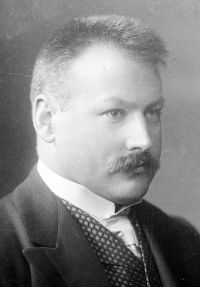
Portrait of Emil Abderhalden Emil Abderhalden Defensive Ferments of the Animal Organism (1914)

Sometimes, however, the pioneer work is crowned with success. An important stage is left behind, and a new outlook gained. The final aim, however—a complete insight into the metabolism of the cell—still lies far ahead. Yet the knowledge we have acquired serves as a compass to keep us on the right road. The careful traveller will never leave anything unnoticed, for observations which often seem but trifles may point the way to entirely new problems.
In studying the functions of the cell we must never forget that there is not a single substance which is of no value to the cell.
Source: Wikisource

Portrait of Emil Abderhalden Emil Abderhalden Defensive Ferments of the Animal Organism (1914)

Very often a given substance is incapable of combination, in which case it must first be so transformed by special processes as to be susceptible to combination. We thus see how the cells of the body oxidize, reduce, or decompose, until a product is reached that is capable of combination. There is no reason to doubt that unicellular organisms have similar means of defence at their disposal, but they are not so easily traced, owing to the fact that it is more difficult to add certain substances to a single cell, without damaging it, than it is in the case of a more complicated organism.
Source: Wikisource

Get perspective with Kwize: daily news enlightened by great literature