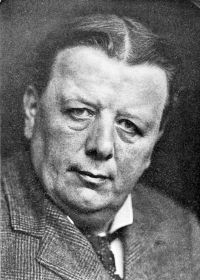
Sir E. Ray Lankester

Sir E. Ray Lankester

Summary

Portrait of Sir E. Ray Lankester Sir E. Ray Lankester The Kingdom of Man

What we call the will or volition of Man—a discussion of the nature and limitation of which would be impossible in these pages and is happily not necessary for my present purpose—has become a power in Nature, an imperium in imperio, which has profoundly modified not only man’s own history but that of the whole living world and the face of the planet on which he exists. Nature’s inexorable discipline of death to those who do not rise to her standard—survival and parentage for those alone who do—has been from the earliest times more and more definitely resisted by the will of Man.
Source: Gutenberg

Portrait of Sir E. Ray Lankester Sir E. Ray Lankester The Kingdom of Man

The great joys of Art, the delights and entertainment to be derived from the romance and history of human character, are not parts of it. They must never be neglected. But are we not justified in asserting that, for some two hundred years or more, these ‘entertainments’ have been pursued in the name of the highest education and study to the exclusion of the far weightier and more necessary knowledge of Nature?
Source: Gutenberg

Portrait of Sir E. Ray Lankester Sir E. Ray Lankester The Kingdom of Man

It is said that she may well be reserved for these delightful pursuits, whilst newer institutions should do the hard work of aiding man in his conquest of Nature. At first sight such a proposal has a tempting character: we are charmed with the suggestion that our beautiful Oxford should be enclosed by a ring fence and cut off for ever from the contamination of the world. But a few moments’ reflection must convince most of us that such a treatment of Oxford is an insult to her and an impossibility. Oxford is not dead.
Source: Gutenberg

Get perspective with Kwize: daily news enlightened by great literature