Summary

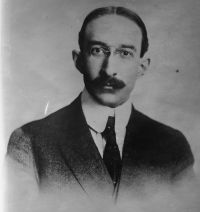
Portrait of Henry Edward Crampton Henry Edward Crampton The Doctrine of Evolution: Its Basis and Its Scope

It is an inexorable law of nature that all living things must fight daily and hourly for their very lives, because so many are brought into the world with each new generation that there is not sufficient room for all. No organism can escape the struggle for existence except by an unconditional surrender that results in death. Everywhere we turn to examine the happenings of organic life we can find nothing but a wearisome warfare in which it is the ultimate and cruel lot of every contestant to admit defeat.
Source: Gutenberg

Portrait of Henry Edward Crampton Henry Edward Crampton The Doctrine of Evolution: Its Basis and Its Scope

We must disregard for the time those insistent questions as to higher human nature, even though we must inevitably consider them at the last. Indeed, all the human problems must be put aside until we have prepared the way for their study by learning what evolution means, what a living organism is, and how sure is the evidence of organic transformation. When we know what nature is like and what natural processes are, then we may take up the questions of supreme and deep concern about our own human lives.
Source: Gutenberg

Portrait of Henry Edward Crampton Henry Edward Crampton The Doctrine of Evolution: Its Basis and Its Scope

The naturalist comes to view our species as a kind of animal, and as a single one of the hundreds of thousands of known forms of life; thus the question of human origin is but a small part of organic evolution, which is itself only an episode in the great sweep of cosmic evolution, endless in past time and in the future. Were we some other order of beings, and not men, human evolution would appear to us in its proper scientific proportions, namely, as a minute fraction of the whole progress of the world.
Source: Gutenberg

Get perspective with Kwize: daily news enlightened by great literature