Don Whitehead, Border guard (1963)
“ It is fundamental that the search include the most logical source of information—those persons with immediate access to necessary facts who are willing to cooperate in the interest of the common good. ”
Access denotes the ability to reach, use, or engage with resources, information, or systems. This theme has been examined through various perspectives: Julia Bullard focuses on organizational structures for retrieving knowledge, while Don Whitehead emphasizes collaboration for mutual advantage.
Thomas Widlok addresses the moral aspects of data usage rights, and Abraham Lincoln connects reading with intellectual empowerment. Legal systems, such as Singapore’s laws, establish procedures for access, and the Working Group on Expanding Access promotes the sustainable sharing of research. These viewpoints collectively illustrate access as a complex link between personal needs and societal frameworks.
Don Whitehead, Border guard (1963)
“ It is fundamental that the search include the most logical source of information—those persons with immediate access to necessary facts who are willing to cooperate in the interest of the common good. ”
Julia Bullard, Knowledge Organization For Open Scholarship (2019)
“ The study, critique, and improvement of subject access systems are primary concerns for the field of knowledge organization. Knowledge organization is, in general, concerned with how we represent items such as books in systems such as libraries and how features of similarity and difference (e.g., the names of creators, disciplinary context, and aboutness) can facilitate searching, browsing, and selecting items. ”
Thomas Widlok, Oral Literature in the Digital Age…
“ Since individual researchers differ in the ways in which they restrict access to a source that he or she has collected, it is important to clearly mark who made decisions of access, and preferably also why. ”
 Abraham Lincoln,
Address before the Wisconsin State Agricultural Society
Abraham Lincoln,
Address before the Wisconsin State Agricultural Society
“ A capacity, and taste, for reading, gives access to whatever has already been discovered by others. It is the key, or one of the keys, to the already solved problems. And not only so. It gives a relish, and facility, for successfully pursuing the [yet] unsolved ones. ”
“ Investigations and adjudications of covered individuals who require a determination of suitability, eligibility for logical and physical access, eligibility to hold a sensitive position, eligibility for access to classified information, and, as appropriate, contractor employee fitness, shall be aligned using consistent standards to the extent possible. ”
Parliament of Singapore, Public Order Act 2009 (Now Cap… (2009)
“ The manner in which that access, or priority of access, is to be given shall be set out in the direction under subsection (1) . (4) The terms and conditions on which that access, or priority of access, is to be given shall be set out in the direction under subsection (1) . ”
Parliament of Singapore, Mental Capacity Act 2008 (Now Cap… (2008)
“ The Public Guardian shall at all times have full and free access to all buildings, places, books, papers and electronic computing or storage devices for the purpose of discharging his functions under this Act, and may, without payment, inspect, copy or make extracts from any such books, papers or electronic computing or storage devices. ”
Thomas Widlok, Oral Literature in the Digital Age…
“ A layered model of property and access rights Many conflicts and misunderstandings surrounding property rights in data result from the fact that different layers of property rights are not sufficiently distinguished. ”
Constitution of Socialist Federal Republic of Yugoslavia (1974)
“ The social system of information shall ensure congruous recording, collection, processing and presentation of data and facts significant for recording, planning and guiding social development, and shall ensure accessibility of information of such data and facts. Activities relating to the social system of information shall be of special social concern. ”
Working Group on Expanding Access to Published Research Findings, Accessibility, sustainability, excellence… (2012)
“ In seeking to fulfil the remit passed to us, we have focused on measures to speed process of transition to wider access, and on how to achieve that in a sustainable way. For we are clear that, however it is done, communicating research costs money, and that judgements about the most appropriate channels and mechanisms for increasing access are in part judgements about costs and benefits ”
Working Group on Expanding Access to Published Research Findings, Accessibility, sustainability, excellence… (2012)
“ For all these reasons, individual universities will examine closely the financial implications for them of moves to increase access, and in particular at how they can avoid increases in costs. They will look at the likely transitional as well as continuing costs of measures to ensure that the university’s research is accessible across the world, and that more of the world’s research is accessible across the university. ”
“ Universal access to human knowledge is in our grasp, for the first time in the history of the world. This is not a bad thing. ”
 David Hume,
A Treatise of Human Nature
(1738)
David Hume,
A Treatise of Human Nature
(1738)
“ Now as the right of accession arises from the easy transition of ideas, by which related objects are connected together, it shoued naturally be imagined, that the right of accession must encrease in strength, in proportion as the transition of ideas is performed with greater facility. It may, therefore, be thought, that when we have acquired the property of any small object, we shall readily consider any great object related to it as an accession, and as belonging to the proprietor of the small one ”
 Lucy Maynard Salmon,
Progress in the household
Lucy Maynard Salmon,
Progress in the household
“ Another consideration in favor of selecting domestic service as a reasonable subject for investigation lay in the accessibility of the material. Every household, whether with or without domestic employees, could add its contribution to the inquiry. ”
David Nathan, Oral Literature in the Digital Age…
“ Compare this situation to that of libraries or businesses whose data is anchored in concepts such as title, author, page, quantity, cost, and item code all of which are well-established, stable, and correspond to real-world objects, rather than the contestable interpretations of linguistics. ”
 Robert W. Chambers,
The Tracer of Lost Persons
Robert W. Chambers,
The Tracer of Lost Persons
“ I suppose you have no conception of our business, no realization of its scope—its network of information bureaus all over the civilized world, its myriad sources of information, the immensity of its delicate machinery, the endless data and the infinitesimal details we have at our command. ”
Robert Montgomery Bird, Calavar; or, The Knight of The Conquest…
“ I will not say the safety, but the facility, with which thou mayest traverse these lands, will be greatly increased by knowing some little of their history; and that knowledge I will hasten to impart to thee, and with what brevity I can. If I should be led to speak with more freedom of certain persons than may seem fitting in an inferior and a colleague, I must beseech thee to remember I am doing so to a kinsman, and for his especial information and good. ”
 Isabella L. Bird,
Korea and her neighbors
(1897)
Isabella L. Bird,
Korea and her neighbors
(1897)
“ They are always ready—at least such has been my invariable experience—to place the stores of their local knowledge at the disposal of any one, whether merchant, sportsman, or traveler, who applies to them for information, and to lend him cheerful assistance in the pursuit of his objects. ”
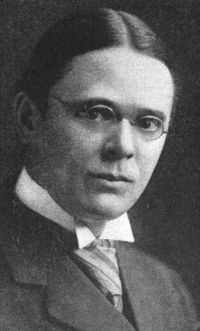 Roscoe Pound,
An Introduction to the Philosophy of Law
Roscoe Pound,
An Introduction to the Philosophy of Law
“ The general safety, peace and order and the general health are secured for the most part by police and administrative agencies. Property and contract, security of acquisitions and security of transactions are the domain in which law is most effective and is chiefly invoked. Hence property and contract are the two subjects about which philosophy of law has had the most to say. ”
A. D. Smith, The Development of Rates of Postage…
“ All the variety of associations which are, in their wide expansion, distinctive of modern civilization and necessary to its life and energy—employers' associations, trade unions, co-operative societies, friendly societies, religious bodies, political and propagandist organizations of every kind, local, national, and international—the whole nervous system of the modern State, depends upon the quick transmission of information and ideas ”
Francis Maurice Drummond, Encyclopædia Britannica, Ninth Edition (1888)
“ But attending at or near the house or place where a person resides or works or carries on business in order merely to obtain or communicate information is not watching or besetting within the statute. ”
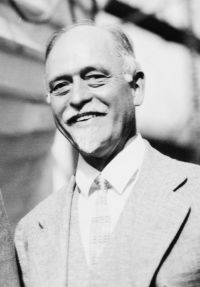 Irving Fisher,
Harper's Pictorial Library of the World War…
Irving Fisher,
Harper's Pictorial Library of the World War…
“ The interests of all persons shall be regarded as having been effectively dealt with by any order, direction, decision, or instruction dealing with property in which they may be interested, whether or not such interests are specifically mentioned in the order, direction, decision, or instruction. No question shall be raised as to the regularity of a transfer of any property, rights, or interests dealt with in pursuance of any such order, direction, decision, or instruction. ”
John Hayward, The Book of Religions
“ They, therefore, give their property and services for the most valuable of all temporal considerations—an ample security, during life, for every needful support, if they continue faithful to their contract and covenant, the nature of which they clearly understand before they enter into it. ”
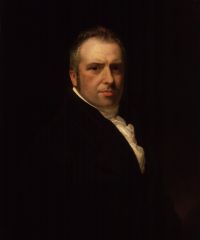 William Hone,
Pamphlets and Parodies on Political Subjects
William Hone,
Pamphlets and Parodies on Political Subjects
“ To adopt a system of Correspondence with those members who live at a distance, and to establish Associations throughout the country, for the purpose of procuring Information of all kinds concerning the conduct and connexions of all persons who will not co-operate in these objects. ”
Anonymous, The Beale Papers (1885)
“ Morriss.—You will find in one of the papers, written in cipher, the names of all my associates, who are each entitled to an equal part of our treasure, and opposite to the names of each one will be found the names and residences of the relatives and others, to whom they devise their respective portions. From this you will be enabled to carry out the wishes of all by distributing the portion of each to the parties designated. This will not be difficult, as their residences are given, and they can easily be found. ”
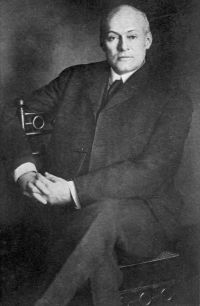 Arthur E. Bostwick,
Library Essays; Papers Related to the Work of Public Libraries
Arthur E. Bostwick,
Library Essays; Papers Related to the Work of Public Libraries
“ The idea that those who control an institution should be familiar with its details appears to originate in an analogy with a man’s control of his own private affairs, when his occupation and income{41} make it necessary that he should attend to all those affairs personally. The citizen who digs and plants his own garden must understand some of the details of gardening. ”
 J. C. Ryle,
Holiness: Its Nature, Hindrances…
J. C. Ryle,
Holiness: Its Nature, Hindrances…
“ Secure that land to them by every needful legal instrument; let it be conveyed as freehold to them and theirs forever; let the conveyance be publicly registered and the property made sure to them by every deed and security that man’s ingenuity can devise. ”
“ I shall want to determine whether to make this new device a community project, or whether to allow it to be offered to his employer on a community royalty agreement. And I shall require details on his older designs for Fiscal to examine into. Research, you should know, is a community function, not something to be done in any set of quarters. ”
George Grant, A Historical Account of Useful Inventions and Scientific Discoveries
“ In whatever point of view we behold it, whether as a medium for giving the utmost facility to the despatch of the common concerns of life; or as affording the eager mind of the philosophic inquirer the ready means to gratify the inquisitive thirst of his knowledge; in every species of mental intelligence, the rapid facility which it affords to the multiplication of those mediums of communication, by which knowledge is promulgated in every part of the earth. ”
W. H. Gantz, Postal Riders and Raiders
“ But strong as the word dissemination is, it is fortified by the use of the word information. An agency for the dissemination of knowledge for example, might better consist with the idea of a library of books. ”
Caroline Louisa Hunt, Home Problems from a New Standpoint
“ She can get information by residence in settlements, from books and periodicals, and through summer assemblies and university extension lectures. Thus the will which is manifested in a quickened social conscience is finding the way in improved methods of spreading information. ”
 John Stuart Mill,
A System of Logic, Ratiocinative and Inductive
John Stuart Mill,
A System of Logic, Ratiocinative and Inductive
“ When in every single instance a multitude, often an unknown multitude, of agencies, are clashing and combining, what security have we that in our computation a priori we have taken all these into our reckoning? How many must we not generally be ignorant of? ”
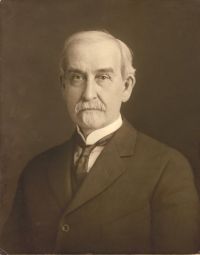 Frank Avery Hutchins,
Traveling Libraries
(1902)
Frank Avery Hutchins,
Traveling Libraries
(1902)
“ Persons who desire to establish systems of traveling libraries, and who wish further information and suggestions in regard to such practical details as the selection of the books, guaranties for the safe keeping of the libraries, fees for borrowers, charging systems, library-cases and catalogs, can best obtain them by writing to the managers of successful systems. ”
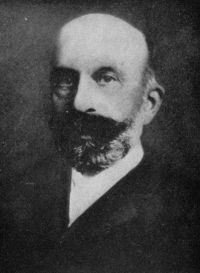 Albion Woodbury Small,
The American Journal of Sociology
(1896)
Albion Woodbury Small,
The American Journal of Sociology
(1896)
“ For illustration, property relations are selected, not because the considerations to be dealt with are new to sociologists, nor because it is desirable to advertise individual opinions, but in order to make the point that, whether the assumptions behind this particular institution of property are tenable or untenable, there is call for such review and restatement of the principles of property that we shall have common premises for theory and practice with reference to details and applications. ”
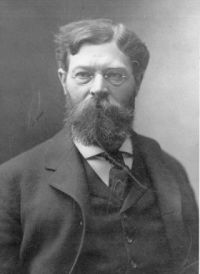 William De Witt Hyde,
Practical Ethics
William De Witt Hyde,
Practical Ethics
“ Through the institutions which the state maintains, schools, almshouses, courts, prisons, roads, bridges, harbors, laws, armies, police, there is secured to the individual the right and opportunity to acquire property, engage in business, travel wherever he pleases, share in the products of the whole earth, read the books of all nations, reap the fruits of scholarly investigation in all countries, take an interest in the welfare and progress of mankind. ”
 Neil Butcher,
A Basic Guide to Open Educational Resources
(2011)
Neil Butcher,
A Basic Guide to Open Educational Resources
(2011)
“ It will be useful for the institution to begin its commitment to sharing resources with others on a limited basis in order to test the potential and explore the policy implications through action research. ”
 Herbert Spencer,
Essays: Scientific, Political, & Speculative…
Herbert Spencer,
Essays: Scientific, Political, & Speculative…
“ Here, however, it remains to be pointed out that a complete conception of the circulating system in a society, includes not only the active human agents who propel the currents of commodities, and regulate their distribution, but includes, also, the channels of communication. ”
Walter A. Montgomery, Some phases of educational progress in Latin America (1920)
“ Institutions of bibliography and information be established, independent of or annexed to seminaries or institutes, for investigation existing or to be founded in America, and providing for the widest exchange of economic, financial, and commercial information collected. ”
Samuel D. Warren, The Right to Privacy (1890)
“ Those with whom our common law originated had not probably among their many merits that of being patrons of letters; but they knew the duty and necessity of protecting property, and with that general object laid down rules providently expansive,—rules capable of adapting themselves to the various forms and modes of property which peace and cultivation might discover and introduce. ”
S. A. Reilly, Our Legal Heritage: King AEthelbert - King George III, 600 A.D. - 1776
“ Knowledge associated with the various professions, occupations, and trades was no longer secret or guarded as a mystery, to be passed on only to a chosen few. The sharing of knowledge was to benefit the community at large. ”
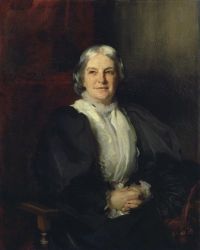 Octavia Hill,
Our Common Land (and Other Short Essays…
Octavia Hill,
Our Common Land (and Other Short Essays…
“ If we establish a system of professed workers, amateur or paid, we shall [Pg 27] quickly begin to hug our system, and perhaps to want to perpetuate it even to the extent of making work for it. Well, here we have then our wonderful company of visitors full of real care for the people, with time and intelligence to apply the wisest principles, did they but know them, with fullest thought, to individual cases; capable of inspiring confidence, of winning allegiance; of getting those whom they visit to understand what is best for their future, and to make up their minds to do it. ”
 John Ruskin,
Fors Clavigera (Volume 4 of 8)
(1871)
John Ruskin,
Fors Clavigera (Volume 4 of 8)
(1871)
“ Conquest, you observe also, just of the kind which in our ‘Times’ newspaper is honoured always in like manner, ‘Private Enterprise.’ The only question is, whether the privacy of your enterprise is always as fearless of exposure as it used to be,—or even, the enterprise of it as enterprising. Let me tell you a little of the private enterprise of dead Venice, that you may compare it with that of the living. ”
James Rees, Foot-prints of a letter carrier…
“ By no act or direction of mine, official or private, could I be induced to aid knowingly in giving circulation to papers of this description, directly or indirectly. We owe an obligation to the laws, but a higher one to the communities in which we live ”
 William Graham Sumner,
Earth-Hunger and Other Essays
(1913)
William Graham Sumner,
Earth-Hunger and Other Essays
(1913)
“ Our modern students, then, searching into the history of property, find these rudimentary communal forms, and they present to us the result of their work as if these facts carried with them some proof as to the only correct or justifiable forms of property, or furnished some criticism of present institutions. ”
Victoria C. Woodhull, A Speech on the Principles of Finance
“ The proper understanding and practice of these functions is the most important thing for a people to arrive at, but, having arrived at this as the basis of all the relations of the people, the scientific construction of the various departments of the complete superstructure which is to cover all the public interests of all the people, as well as to maintain their private interests intact, can be begun. ”
Public heritage is being reframed as strategic data, leading to a commercial dilemma: licensing national archives for AI profit risks subordinating public trust to market logic, effectively privatizing collective memory and erecting new barriers to democratic access and innovation.
The drive to eliminate chaos, fear, and morbidity with technologies of purification, from theological judgment to industrial power and digital encryption, creates an antiseptic utopia. This sterile perfection invariably provokes an insurrection of the repressed, whether through fictional walking corpses or real-world circumvention of control systems.
From their inception, public museums promised universal access, a grand democratic gesture. Yet, the doors often concealed a gilded cage, where elite patronage and overwhelming collections created barriers to the very public they were meant to serve—an enduring paradox.
Equitable care is a stated right, but institutional systems adhere to static, binary definitions of sex that actively conflict with modern medical consensus on gender identity. This schism is the root cause of systemic discrimination, homelessness, and violence against transgender people.
The transition from the metaphorical key of spiritual readiness to the literal password of technology raises a profound tension: does democratizing access to religious art and sites erode the necessary struggle and humility that once defined an authentic encounter with the sacred?
Restrictive federal funding rules (Title X, Medicaid targeting) combine with state-level facility mandates and procedural hurdles to deliberately fracture access to reproductive care. For economically disadvantaged women, this systemic structure transforms the right to choice into a financial impossibility, creating vast care deserts.
Drawing on Hobbes, Beccaria, and Brennan, a legal analysis reveals how the trauma of state prosecution—the 'cruel and superfluous torment of uncertainty'—is intentionally deployed to suppress lawful action and dismantle fundamental rights through fear, regardless of the eventual verdict.
Sensory-assistive technology promises universal access, but a deep philosophical inquiry reveals that perception is a subjective mental construct. Replacing a sense organ with a machine may create a novel reality, not just restore an old one.
Scientific advances in medicine move at a geometric pace, but the social sciences that govern equitable distribution lag behind, resulting in the persistence of preventable crises. Global health equity demands a scientific overhaul of our social and economic systems, recognizing that poverty is the primary disease vector.
Technological mandates for online age verification are constitutionally perilous. Inherent imprecision leads to widespread overblocking, functionally outsourcing censorship to private companies and imposing an undue burden on adult free speech, a restriction that even a small percentage of error renders 'fatal' under the First Amendment.

