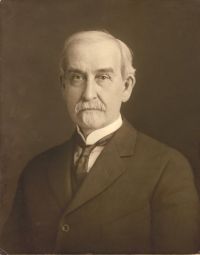
Frank Avery Hutchins

Frank Avery Hutchins

Summary

Portrait of Frank Avery Hutchins Frank Avery Hutchins Traveling Libraries (1902)

For some years careful students of the library movement in the United States have felt confident that every resident of a city would soon have good library privileges without fee. The rivalry of cities, the growing belief in the necessity of free libraries in our general system of education, and the feeling that public libraries are the most enduring monuments are uniting to secure for such libraries great private and public gifts.
Source: Wikisource

Portrait of Frank Avery Hutchins Frank Avery Hutchins Traveling Libraries (1902)

It needs no argument to prove that no small collection of books for temporary service can be as helpful to a community as a permanent public library, and that a traveling library which educates a people to desire and support a good permanent library has fulfilled its highest purpose. It is also evident that some isolated communities cannot or will not support adequate home libraries, and must depend upon traveling libraries almost entirely for their reading.
Source: Wikisource

Portrait of Frank Avery Hutchins Frank Avery Hutchins Traveling Libraries (1902)

If traveling libraries are advertised to be sent for a fee, even a moderate one, they will be drawn to the most intelligent communities where people are most willing to pay for library privileges and where they first hear of new opportunities. If, however, agents for traveling libraries can be sent out, they can find the most needy communities and the persons best fitted to be librarians. Such communities need personal, hand-to-hand work in the cause of education, and associations of individuals working near their own homes can do a work that cannot be done at present by state systems.
Source: Wikisource

Get perspective with Kwize: daily news enlightened by great literature