
Catalog

Definition and stakes

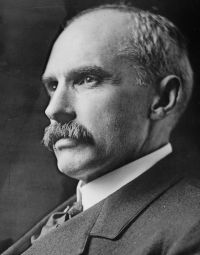
Portrait of Theodore Wesley Koch Theodore Wesley Koch,  The Library Assistant's Manual

“ The moral to be pointed out is that the catalog must be good as a first requisite to a library. In the words of the old comparison, the catalog is the key to the otherwise hidden material buried in books. In a library of any size, the best desk attendant in the world is almost helpless, or at best constantly handicapped, without a convenient and rational classification of the volumes of the collection and the bibliographical aid of a catalogue. The born bibliographer is as rare as the born teacher or poet. ”
Source: Gutenberg

Portrait of John Cotton Dana John Cotton Dana,  A Library Primer — Chapter XXV, Cataloging (1899)

“ A catalog is a labor-saving device in library work. From it both reader and attendant can ascertain whether the library has a certain book. By consulting the catalog for the class-number, the book may be looked for in its proper place, thus often saving hunting through the shelves in several classes.
A printed list or catalog of the library is one of the first things that will be asked for by the public. It is useful especially for those who cannot well visit the library. But it is very expensive; it is out of date as soon as issued; it cannot often be sold
”
Source: Wikisource

Portrait of John Cotton Dana John Cotton Dana,  A Library Primer

“ Lists in which the titles of the books come first are better liked by the general public than are author-lists. People commonly know books by name, not by author.
Don't make the mistake of spending much money, at the library's beginning, for a printed catalog. A printed catalog, as stated in chapter 25, is not a necessity. It is useful, particularly for home use, to tell whether the library owns certain books; but with a good card catalog, newspaper lists, special lists, and the like, it is not a necessity.
”
Source: Gutenberg

Get perspective with Kwize: daily news enlightened by great literature