Summary

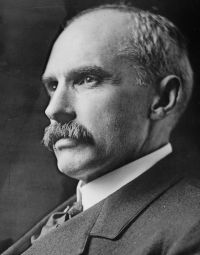
Portrait of John Cotton Dana John Cotton Dana,  A Library Primer — Chapter XXV, Cataloging (1899)

“ A catalog is a labor-saving device in library work. From it both reader and attendant can ascertain whether the library has a certain book. By consulting the catalog for the class-number, the book may be looked for in its proper place, thus often saving hunting through the shelves in several classes.
A printed list or catalog of the library is one of the first things that will be asked for by the public. It is useful especially for those who cannot well visit the library. But it is very expensive; it is out of date as soon as issued; it cannot often be sold
”
Source: Wikisource

Portrait of John Cotton Dana John Cotton Dana,  A Library Primer — Chapter XXV, Cataloging (1899)

“ In a small library which is always to be small it is not necessary to follow all the rules laid down in these books. It is much better, however, to do all the work, even in a very small library, according to the most approved methods. So to do brings you in touch with your fellows and gives you the comfort which comes from the consciousness of work well done, even if the amount of the work be small. ”
Source: Wikisource

Portrait of John Cotton Dana John Cotton Dana,  A Library Primer — Chapter XXV, Cataloging (1899)

“ Author card. (Reduced; actual size, 71⁄2 x 121⁄2 cm.)
Preserve this catalog with great care. It is the key to the records in shelf-list and accession book. In a small library the public may very properly use it. As soon as possible, if your library is to be quite large and much used, prepare for public use a duplicate of it, omitting all those entries in the original which are of use only to the librarian.
The average reader more often remembers the titles of books than their authors.
”
Source: Wikisource

Get perspective with Kwize: daily news enlightened by great literature