Arabesque

Definition and stakes

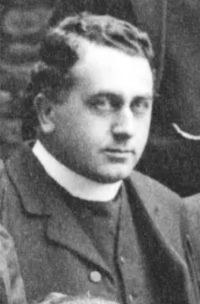
Portrait of Victor Hugo Victor Hugo,  William Shakespeare

“ The arabesque is endless; it has a strange power of extension and aggrandizement; it fills horizons, and opens up others; it intercepts the luminous deeds by innumerable intersections; and, if you mix the human figure with these entangled branches, the ensemble makes you giddy; it is striking. Behind the arabesque, and through its openings, all philosophy can be seen; vegetation lives; man becomes pantheist; a combination of infinite takes place in the finite; and before such work, in which are found the impossible and the true, the human soul trembles with an emotion obscure and yet supreme. ”
Source: Gutenberg

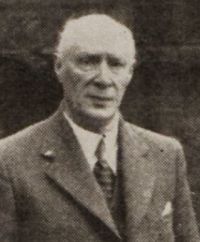
Portrait of Lewis Spence Lewis Spence,  Legends & Romances of Spain

“ Many critics hasten to reassure us regarding his judgment and discrimination. But even a slight acquaintance with Arabic literature will show that they have been carried [42] away by their prejudice in favour of the subject on which they wrote. In the garden of the Arabian poet every flower is a jewel, every plot is a silken carpet, tapestried with the intricate patterns of the weavers of Persia, and every maiden is a houri, each of whose physical attributes becomes in turn the subject of a glowing quatrain. ”
Source: Gutenberg

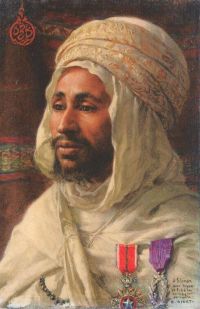
Portrait of Sliman Ben Ibrahim Sliman Ben Ibrahim,  The Life of Mohammad, the Prophet of Allah

“ Even reduced to its own resources, this art of Arabic calligraphy is one of the most marvellous forms of decorative skill that has ever sprung from human imagination. It is perhaps the only science of ornament of which it may be said without exaggeration that it possesses a soul, for like the voice, it expresses thought. Owing nothing even to the most cultured parts of the outer world, its independence resembles that of music and seems like the stenography of the innermost beatings of the heart. ”
Source: Gutenberg

Get perspective with Kwize: daily news enlightened by great literature