Brush

Definition and stakes

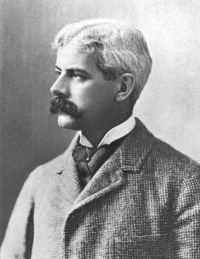
Henry P. Bowie On the Laws of Japanese Painting…

The brush is the handmaid of the artist's soul and must be responsive to his inspiration. The student is warned to be as much on his guard against carelessness when handling the brush as if he were a swordsman standing ready to attack his enemy or to defend his own life; and this is the reason: Everything in art conspires to prevent success. The softness of the brush requires the stroke to be light and rapid and the touch delicate.
Source: Gutenberg

Portrait of John C. Van Dyke John C. Van Dyke American painting and its tradition (1919)

And he could give the solidity of a ledge of rock or the lightness of a floating cloud much better with a broader brush. As he grew in art his brush continued to broaden. His work became more sketchy, his brush freer and fuller, and possibly before he died he may have heard his work referred to as “impressionistic”—heaven save the word!
Source: Gutenberg

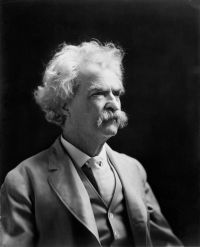
Charles H. Caffin A Child's Guide to Pictures

I need not tell you that an artist’s hands may be alive with feeling when he holds a brush, just as when he has a pencil in them. In fact, what we have said about feeling and expression in line may be applied to brushwork. In the case of a man who is not merely a filler in of spaces with paint, but is by instinct a painter, the brushwork grows into life beneath his hand. Sometimes he lays aside his brush and takes a palette-knife, with which to spread the paint on the surface or to scrape the part already painted. Sometimes he uses no tool at all, but kneads the paint with his thumb.
Source: Gutenberg

Get perspective with Kwize: daily news enlightened by great literature