Ironing

Definition and stakes

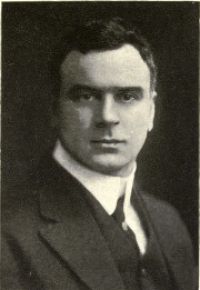
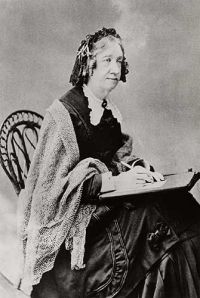
Portrait of Arthur Stringer Arthur Stringer,  The Prairie Mother

“ I sat down and stared at that neatly folded pile of baby-clothes two feet high, a layer-cake of whites and faded blues and pinks. I stared at it, and began to gulp tragically, wallowing in a wave of self-pity. I felt so sorry for myself that I let my flat-iron burn a hole clean through the ironing-sheet, without even smelling it. That, I told myself, was all that life could be to me, just a round of washing and ironing and meal-getting and mending, fetch and carry, work and worry, from sun-up until sun-down, and many a time until midnight. ”
Source: Gutenberg

Various,  Chambers's Journal of Popular Literature…

“ Here the girls learn laundry-work, from the clean washing and ironing of a coarse towel to the careful goffering and ironing of a lady's ruffle or a gentleman's shirt. They all take their turn in every department of the work, not doing a set piece and then leaving it because the task is done, but taking an interest in the part assigned to them, and each one vying with the other in quickness and thoroughness. The pride with which they exhibited their ironing shewed plainly that it was no forced task, but a labour of genuine pleasure. ”
Source: Gutenberg

Edith Allen,  Mechanical Devices in the Home

“ Waxing roller
of mangle.
178. Flat, or Sadirons. Irons are of two kinds—those which must be heated on a stove, and the self-heating ones. The weight of the iron governs the amount of heat it will absorb, and this is the amount that it will give up in ironing. Heat is needed to dry clothes, and as the cloth can be smoothed best when damp, but will wrinkle again unless dried while smooth, heat is essential to the ironing process.
The weight of the iron helps in the smoothing process. The heavy irons do the best grade of work, but are harder to manipulate.
”
Source: Gutenberg

Get perspective with Kwize: daily news enlightened by great literature