“ When you get a pair of cuffs nicely laundried, so that they are stiff and shining, how do you enjoy struggling with them to get the cuff button in, or to get it out—especially if you are in a hurry?"This query produced much merriment among two of the girls, which the elder sister presently explained:"You ought to ask that question of our brother Dick. He does have the most trying times with his cuff buttons. He wants his [119] cuffs so stiff they can almost walk alone, and then he fusses and struggles to get the buttons in so as not to break the cuff. ”
Cuff
Definition and stakes
The cuff, a garment component typically found on sleeves, serves both functional and symbolic roles in clothing, often emphasizing precision in design and personal grooming. From James Francis Thierry’s whimsical tales of missing cuff-buttons to Alfred Ayres’s practical musings on their proportion, authors have explored cuffs as objects of both narrative intrigue and sartorial necessity.
Technical texts, like those by the Butterick Pattern Company, detail their making, while literary works, such as Rudyard Kipling’s references, imbue them with subtle character. These varied perspectives reveal cuffs as intersections of utility, artistry, and human behavior.
Quotes about “cuff”
Robert W. Krepps, Vengeance From the Past
“ Then Bill Cuff said from the back seat, "You seem pretty calm, Ray," and laughed. "That's the blood," he said admiringly. "That's the dark blood. A man would be fizzing and twitching and babbling his head off."I had determined not to think any further than the rescue of Nessa. I wasn't going to bog down in speculations as to my humanness, or the truth of this whole theory of Cuff's; but even so, the chills chased over me when he said man like that. Wasn't I altogether human? ”
James Francis Thierry, The Adventures of the Eleven Cuff-Buttons
“ Well, just this Easter Monday morning, when the Earl was being dressed by his valet, an Italian named Luigi Vermicelli, he noticed with horror that his nice pink-and-green silk shirt, lying over the back of the mahogany arm-chair beside his bed, had the ancestral cuff-buttons missing from the cuffs! ”
“ They fit better around the neck. It is better to have the collar separate and for some reasons the cuffs also—dress shirts excepted, perhaps. Let your collars always be in and strictly within the fashion, unless you would look like a rowdy, in which case you are at liberty to go to any extreme you please and to gratify any vulgar caprice you may chance to have. Your cuffs should be no larger than is necessary to admit of your slipping your hand through them when they are buttoned. Why should a man wear a cuff so large that one may see up to his elbow? ”
James Francis Thierry, The Adventures of the Eleven Cuff-Buttons
“ The cuff-buttons are gone,—the cuff-buttons are gone! One pair of them, anyhow. Come quick! The earl is nearly wild about it. Money's no object to him!" the apparition yelled at us.I was so completely taken aback by the way that chump had burst in on us that I spilled all the beautiful tobacco off the cigarette-paper onto the floor. ”
Vanness Copeland, The Copeland Method
“ Then turn sleeve lining in on the turn up two inches from the bottom of cuff with basting stitches, and fell lining with silk same color as the cloth or lining. Finish both sleeves the same. Remove basting, turn sleeves right side out; and press all around cuff as explained. When felling do not take long stitches, short ones look neater and are stronger and work will have a better appearance when finished. Should the sleeve be finished with stitching around the cuff, finish the same when repairing. Sew buttons on, this completes the repairing of sleeves at the bottom. ”
by Butterick Pattern Company, The New Dressmaker (1921)
“ The same general principles are applied to the cuff as to the collar, and are simply adapted to suit the design of the cuff. The cuffs may be closed with buttons and buttonholes, or with buttons and loops. (Chapter 24, page 114.) Or the buttons may be simply ornamental and the closing made underneath with hooks and eyes or tiny snap fasteners. (Chapter 24, page 116.) THE CLOSING OF THE BLOUSE depends on the degree of softness and dressiness that you want to give to the blouse. The closing of the waistline is always made secure with a hook and eye, or button and loop. ”
James Francis Thierry, The Adventures of the Eleven Cuff-Buttons
“ Aren't you worrying about the Puddingham cuff-buttons at all? Aren't you [Pg 17] going to try to dope out an explanation of their disappearance?" I inquired anxiously."There you go again, Watson, you old boob!" my friend replied. "How many times must I tell you that it is a capital mistake to theorize in advance of the facts! Keep your shirt on till we get out to the castle, Doc; and in the meantime ich kebibble who swiped the cuff-buttons!" ”
Günther F. Hertzer, Garment cutting in the twentieth century (1892)
“ The width of the sleeve, both at the elbow and at the cuff, most always depends on style or notion. A long sleeve must be smaller at the cuff than a short one, but a cutter should always inquire as to what a customer wants and write the measure down. ”
W. D. F. Vincent, The Cutter's Practical Guide (1898)
“ A pocket is sometimes put in the pleats at side, and a small ticket or cash pocket is invariably put in the fore-part. The one great feature about the garment is to keep it close up at the neck, as any excess of size at that part would detract from the fit. The collar is of the ordinary stand form, and the cuff either left plain or made to form a gauntlet style of cuff as shown on diagram 49. A button stand of 1+1⁄4 inches is allowed on, so that the buttons may come just down the centre. ”
Eliot Gregory, The Ways of Men
“ The cuff most in favor can be worn four different ways, and is attached to the shirt by a steel instrument three inches long, with a nipper at each end. The amount of white visible below the coat-sleeve is regulated by another contrivance, mostly of elastic, worn further up the arm, around the biceps. ”
William Deskitt Foot Vincent, The cutters' practical guide to the cutting of ladies' garments (1892)
“ The opposite defect to this is a dragging from forearm to elbow, diagram 51. In this defect a most uncomfortable pressure is felt when the arms rest at the sides, but plenty of ease exists for the arm being brought forward; there is a lot of fulness and foul material at the top of hind-arm, and a general tendency for the cuff to stand away from the hand. ”
William Deskitt Foot Vincent, The cutters' practical guide to the cutting of ladies' garments (1892)
“ For an ordinary close-fitting sleeve, hollow the forearm 2 inches, then measure from 2 to 8 half the size of sleeve desired, plus two seams; in the same manner apply the width of cuff. Get the angle of cuff by squaring across from hindarm, taking the angle from elbow downwards as the guide. Draw the forearm straight from 51⁄2 to 2, and from 2 to C, and on no account hollow it between as an examination of the arm will at once show it to be round between elbow and wrist, and to cut a hollow to fit it is quite a mistake. Tone down the angle at 2, and the topside sleeve is complete. ”
W. D. F. Vincent, The Cutter's Practical Guide (1898)
“ This style of garment is one of the most suitable for boys' and youths' wear, being particularly appropriate for school use. It is usually made up as represented having 5 pockets, as shown on diagram, and an inside breast pocket. It is made to button fairly high up, the edges stitched and the cuff also stitched to form a cuff, two buttons being put on as shown. ”
Maud C. Cooke, Social Life; or, The Manners and Customs of Polite Society
“ A sleeve that falls in lace and frills just below the elbow hides many defects, besides softening, and rendering delicate, the lower arm and the hand.A sleeve long enough to turn upward as a cuff, is much more effective than a simulated cuff, just as the thing itself is always better than an imitation. A sleeve that stops short at the wrist joint should be relieved by lace to be artistic. ”
 F. Scott Fitzgerald,
The Great Gatsby
(1925)
F. Scott Fitzgerald,
The Great Gatsby
(1925)
“ "I see you're looking at my cuff buttons." I hadn't been looking at them, but I did now. ”
 Arthur B. Reeve,
The Soul Scar: A Craig Kennedy Scientific Mystery Novel
Arthur B. Reeve,
The Soul Scar: A Craig Kennedy Scientific Mystery Novel
“ From his cabinet he took and adjusted several little instruments, with an attachment that could be placed about the wrist, like a cuff or strap. These cuffs were hollow and from each ran a tube attached to an indicator. Both the hollow cuffs and the tubes were filled with a colored liquid which registered on a scale on the indicator part. But I anticipate my story.I found my end of the duty far from pleasant, although under other circumstances, suspicion or not of Honora, I should have enjoyed an opportunity to meet her. ”
“ He pressed her flat up against a building and, holding her fast there with the pressure of his left arm across her throat, he got his nippers out of his pocket. Another second or two more of confused movement and he had her helpless. The little steel curb was twined tight about her right wrist below the rumpled white cuff. By a twist of the handles which he held gripped in his palm he could break the skin. Two twists would dislocate the wrist bone. A strong man doesn’t fight long after the links of the nippers start biting into his flesh. ”
 Charles Dickens,
Barnaby Rudge
(1841)
Charles Dickens,
Barnaby Rudge
(1841)
“ and in particular, Mr Cobb would acquaint him, that when he was his age, his father thought no more of giving him a parental kick, or a box on the ears, or a cuff on the head, or some little admonition of that sort, than he did of any other ordinary duty of life; and he would further remark, with looks of great significance, that but for this judicious bringing up, he might have never been the man he was at that present speaking; which was probable enough, as he was, beyond all question, the dullest dog of the party. ”
1911 Encyclopædia Britannica, Volume 6… (1911)
“ COIF (from Fr. coiffe, Ital. cuffia, a cap) , a close-fitting covering for the head. Originally it was the name given to a head-covering worn in the middle ages, tied like a night-cap under the chin, and worn out of doors by both sexes; this was later worn by men as a kind of night-cap or skull-cap. ”
 Irvin S. Cobb,
My Story That I Like Best
Irvin S. Cobb,
My Story That I Like Best
“ He didn't mop his face, though. He unrolled the handkerchief slowly, as if it contained something immensely fragile and valuable, and then, thrusting it back in his pocket, he faced Mr. Trimm. He was carrying in his hands a pair of handcuffs that hung open-jawed. The jaws had little notches in them, like teeth that could bite. ”
Arthur Scott Bailey, The Tale of Cuffy Bear
“ It was the nicest water he had ever tasted in all his life, for it was quite sweet—just as if somebody had left a heap of honey in the bottom of the bucket. But when Cuffy licked the end of the spout with his little red tongue he found that that tasted sweet too. Yes! it certainly was a wonderful spring. Cuffy was very glad that he had found it. ”
Various, The Girl's Own Paper, Vol. VIII, No…
“ In the daytime deep cuffs are much worn; they are cut so as to stand away from the arm like the deep cuffs of a cavalier glove. Then there are puffs at the shoulder; and there is also a new sleeve that has no seam at the back of the arm. Shoulder-straps and epaulettes are very popular additions to the bodice; and we find shoulder-straps without epaulettes, and epaulettes without shoulder-straps, or both together. Some of the shoulder-straps to woollen dresses are of the material of the dress, which may be braided or embroidered. ”
Kate Heintz Watson, Textiles and Clothing
“ PLAIN SLEEVE WITH CUFF, SHOWING GENERAL METHODS OF SEWING ON BANDS The box plait is made if desired and the under arm and shoulder seams basted when the shirt waist is ready to try on. Make any change in the seams necessary. The neck band is put on in the same way as the cuffs, sleeves sewed in, fullness arranged at the back and a tape placed at the waist line. Three hooks or other fastenings should always be placed at the back to attach to corresponding fastenings in the skirt band. The bottom edge of the waist may be finished by overcasting. ”
Kate Heintz Watson, Textiles and Clothing
“ The sleeves should be made at the same time and before the cuffs, then the cuffs, puffs, or whatever special trimming is to be applied to them should be put on both sleeves at the same time. If the second sleeve is not made or trimmed until after the first is finished, it will be much more difficult to secure exactly the same effect. If it is impossible to complete both sleeves at one time, make the sleeves one day and the cuffs or trimming the next day. ”
 Alice Morse Earle,
Two Centuries of Costume in America…
Alice Morse Earle,
Two Centuries of Costume in America…
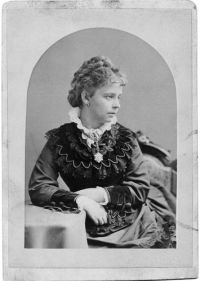
“ In the hundreds of inventories I have investigated I have never seen half a dozen entries of cuffs. The two or three I have found have been specified as “lace cuffs.” George Fox, the founder of Quakerism, wrote with a vivid pen; one of his own followers said with severity, “He paints high.” Some of his denunciations of the dress of his day afford a very good notion of the peculiarities of contemporary costume; though he may be read with this caution in mind. He writes deploringly of women’s sleeves (in the year 1654) ”
 Edmund Clerihew Bentley,
Trent's Last Case
(1913)
Edmund Clerihew Bentley,
Trent's Last Case
(1913)
“ I pointed out to him the fact you didn't observe, that there were no cuffs visible, and that they had, indeed, been dragged up inside the coat-sleeves, as yours would be if you hurried into a coat without pulling your cuffs down. ”
Arthur Scott Bailey, The Tale of Cuffy Bear
“ And with that, Cuffy started to climb the old tree. It took him no time at all to hitch himself up the trunk. He shinned up just as any little boy would climb a tree. And in less time than it takes to tell it, Cuffy had reached the limb from which the nest hung, and he had stuck his paw right through the side of it.You remember that something is always happening in the forest? ”
Arthur Scott Bailey, The Tale of Cuffy Bear
“ All the way he had to walk on his hind legs, because it hurt him terribly whenever he put one of his front-paws on the ground.Cuffy wept very hard when Mrs. Bear pulled out the quills. And his paws were so sore that he could not feed himself. His mother had to put into his mouth bits of the frozen turnips that his father found in Farmer Green's field. And though afterward Cuffy did many things that he ought not to have done, he never, never touched a porcupine again. ”
Friedrich Kluge, An Etymological Dictionary of the German Language (1891)
“ The Teut. origin of the word Kopf in its ModHG. sense is also supported by the fact that OHG. chuppha, MidHG. kupfe, f., ‘head-dress,’ evidently connected with Kopf, is necessary to explain some Rom. cognates — Ital. cuffia, Fr. coiffe, and MidLat. cofea, are derived from OHG. chuppha. Besides, Lat. cûpa, cuppa, as a fem. is not well adapted in form to explain the Teut. ”
Arthur Scott Bailey, The Tale of Cuffy Bear
“ VIII CUFFY LEARNS TO SWIMYes! Cuffy Bear was floating down the river on a cake of ice! How he wished he had been a good little bear and stayed at home, instead of running away to the river all alone! He was huddled up in a little black heap in the center of the cake, and crying as if his heart would break. For Cuffy thought he would never see his mother and father and Silkie again. If only he knew how to swim, like his father! But he didn't; and there he was, being swept away down the valley, right toward Farmer Green's house. It certainly was enough to make anybody weep. ”
Arthur Scott Bailey, The Tale of Cuffy Bear
“ And he was just going to knock it off the hook that held it when he noticed that a small spout had been driven into the tree just above the bucket. And as Cuffy stood there on his hind legs, reaching up as high as he could, he saw a tiny drop fall from the spout and go splash! into the bucket. Then, as he watched, another drop fell; and another and another and another. Cuffy wondered where they came from. It must be—he thought—that there was a spring inside that tree. Yes! he was sure of it, for the bucket was half full of water. He felt thirsty, for he had not had a drink since lunch-time. ”
Irvin S. Cobb,
The Escape of Mr. Trimm
“ Merely a pair of steel rings clamped to one's wrists and coupled together with a scrap of chain, but they'll twist your arms and hamper the movements of your body in a way to constantly catch the eye of the passer-by. When a man is coming toward you, you can tell that he is handcuffed before you see the cuffs. ”
 William J. Long,
Wood-folk comedies
William J. Long,
Wood-folk comedies
“ They are too droll, and the big woods seem to need them. They hide, and the mother, after vain calling, must go smell them out; but as the end of that game is commonly a cuffing, it is not repeated. Then, mindful of their ears, the cubs begin to wrestle; or they face each other and box, striking and fending till one gets more than he wants, when they clinch and go rolling about in a rough-and-tumble. ”
Arthur Scott Bailey, The Tale of Cuffy Bear
“ Cuffy gave a great sigh of satisfaction. He had seen a mowing-machine. He was glad that he had come down into the valley. He was not the least bit sorry that he had disobeyed his parents and stolen away from home.Yes, Cuffy was feeling very happy as he went prowling along the border of the forest. He crept in and out of the bushes that fringed the hay-field, and was having altogether a most pleasant time; until all at once he stopped short. Cuffy's nose sniffed the air for a moment, and the hairs on his back bristled just like those on a dog when he is startled. ”
