Porcupine

Definition and stakes

Sir Charles G. D. Roberts The Watchers of the Trails: A Book of Animal Life

But it had the same tranquil air of owning the earth. The moonlight, shining full upon it, showed its pointed nose, and two broad, white stripes running down the black fur of its back.
The stranger reached the opening in the fence about three seconds ahead of the porcupine. And this time the porcupine was the one to defer. He did not like it. He grunted angrily, and his deadly spines stood up. But he drew aside, and avoided giving any offence to so formidable an acquaintance. No foot of ground would his sturdy courage yield to bob-cat, bear, or man; but of a skunk he was afraid.
Source: Gutenberg

Winthrop Packard White Mountain Trails (1912)

But though the porcupine may squeal and move for a few shambling steps with some degree of quickness, he is by no means afraid of you. He just moves off a few feet, turns his back, shakes out his quills till they all point true, then waits for you to rush at him and bite him from behind—waits with a wicked grin in his little eye as he leers over his shoulder at you.
Source: Gutenberg

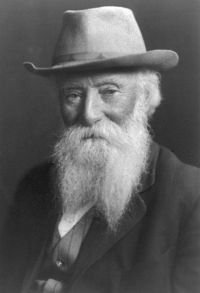
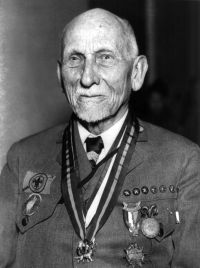
Portrait of John Burroughs John Burroughs Squirrels and Other Fur-Bearers

When you come suddenly upon the porcupine in his native haunts, he draws his head back and down, puts up his shield, trails his broad tail, and waddles slowly away. His shield is the sheaf of larger quills upon his back, which he opens and spreads out in a circular form so that the whole body is quite hidden beneath it. The porcupine’s great chisel-like teeth, which are quite as formidable as those of the woodchuck, he does not appear to use at all in his defense, but relies entirely upon his quills, and when those fail him he is done for.
Source: Gutenberg

Get perspective with Kwize: daily news enlightened by great literature