Summary

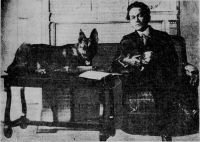
Portrait of Royal Dixon Royal Dixon The Human Side of Animals

The neighing of horses, the howling of dogs and wolves, the mewing of cats, the bleating of sheep, the lowing of cows, the chattering of monkeys and baboons is nothing more nor less than their language. And it is quite as intelligible to us as is the chattering of the Hottentots of Africa. Because we do not speak the languages of our animal friends does not take away from the genuineness of the languages; we might as well claim that because our horse does not comprehend what we are saying, that we are not speaking a language!
Source: Gutenberg

Portrait of Royal Dixon Royal Dixon The Human Side of Animals

Beaver's nursery, and here the young beavers sleep and play.
From the outside these beaver huts resemble Esquimaux snow-houses, being almost circular in form, and domed. The walls are quite thick enough to keep out the cold, but with all the beaver's ingenuity, he is helpless against trappers. Summer and winter they are hunted, until now they are fast becoming extinct. How few people seem fully to realise and care what is being done to wild animals! They do not seem to know that it is a crime to take the life of a being unnecessarily. Only human life is sacred to them!
Source: Gutenberg

Portrait of Royal Dixon Royal Dixon The Human Side of Animals

This is everywhere indicated by the great growing group of people who come together for a common music, either as a chorus or an orchestra or both. But in this field man has not yet attained such unity of communal effort as have the frogs. In the great swamps of the world myriads of them gather from miles around, conscious of one purpose, and by a marvellous understanding and co-operation create for themselves a symphony with beauties and harmonies of its own, and such as to stand unrivalled in man's musical world.
Source: Gutenberg

Get perspective with Kwize: daily news enlightened by great literature