Kilogram

Definition and stakes

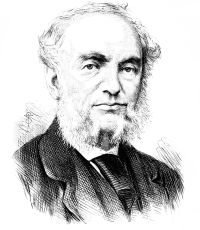
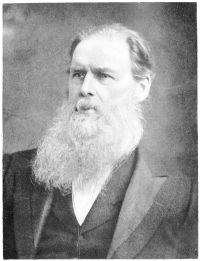
William Matthew Flinders Petrie and Henry James Chaney,  1911 Encyclopædia Britannica (1911)

“ In determinations of volume which do not admit of a high degree of accuracy the cubic decimetre can be taken as equivalent to the litre; and in these determinations expressions of volumes based on the cube of the unit of linear measure can be substituted for expressions based on the litre as defined above.
(c) The kilogram is the unit of mass; it is equal to the mass of the international prototype of the kilogram. [1]
(d ) The term “weight” denotes a magnitude of the same nature as a force; the weight of a body is the product of the mass of the body by the acceleration of gravity
”
Source: Wikisource

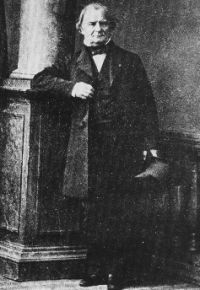
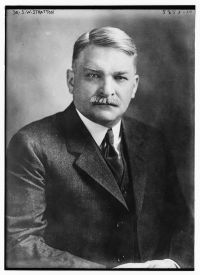
Portrait of Samuel Wesley Stratton Samuel Wesley Stratton,  The New International Encyclopædia (1905)

“ These are made of an alloy of platinum with 10 per cent. of iridium. April 5, 1893, the Treasury Department adopted meter No. 27 and kilogram No. 20 as the standards of the country, and since that time all measures are standardized against these, following the law of 1866 which defined the ratio of the yard to the meter as 3600 to 3937, and the ratio of the pound to the kilogram as 1 to 2.2046. For the history and derivation of the meter and kilogram, see Metric System. ”
Source: Wikisource

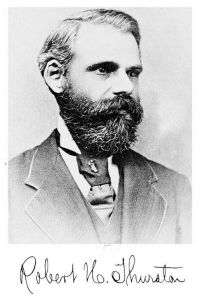
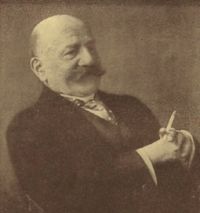
Portrait of William Stanley Jevons William Stanley Jevons,  The principles of science

“ Accordingly the unit of energy will be in the English system, that required to lift one pound through about the thirty-second part of a foot; in terms of metric units, it will be that required to lift a kilogram through about one tenth part of a metre.
Every person is at liberty to measure and record quantities in terms of any unit which he likes. He may use the yard for linear measurement and the litre for cubic measurement, only there will then be a complicated relation between his different results.
”
Source: Gutenberg

Get perspective with Kwize: daily news enlightened by great literature