Summary

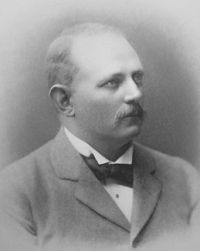
Portrait of P. H. Emerson P. H. Emerson Naturalistic Photography for Students of the Art

We now come to a great and deservedly well-known name—that of Thomas Bewick, the engraver on wood. Here we have a man working in a humble way, humble that is as compared with painting or sculpture, yet loving and studying nature in every detail, and following her in all her mystery and charm, only daring now and then to add some quiet fancy of his own, and yet he lives and his name grows greater every day.
Source: Gutenberg

Portrait of P. H. Emerson P. H. Emerson Naturalistic Photography for Students of the Art

We are conscious of the willow-tree, conscious of the light dress and the decaying timbers of the landing-stage, conscious of the cottage, away in the middle distance, and conscious of the poplars telling blue and misty over the cottage roof; conscious, too, are we of the water lapping round the landing-stage;—we feel all these, but we see clearly and definitely only the charming face. Thus it is always in nature, and thus it should be in a picture. Let us, however, still keep to our scene, and imagine now that the whole shifts, as does scenery on a stage
Source: Gutenberg

Portrait of P. H. Emerson P. H. Emerson Naturalistic Photography for Students of the Art

When a picture is patched together, as it were, a bit here and a bit there, whatever the gain in composition, there is always a more than corresponding loss in those little subtleties which give quality to the work. If the beauty of a subject in nature does not appeal to the painter with sufficient force to make him wish to paint it exactly as it is, he had better leave it alone altogether, and seek some other that does. A man must be moved too deeply by something to dream of improving it by alterations, before he can possibly paint a really good picture.
Source: Gutenberg

Get perspective with Kwize: daily news enlightened by great literature