Summary

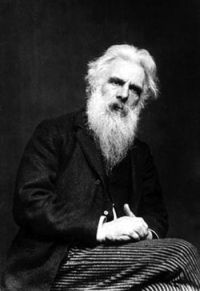
Portrait of Eadweard Muybridge Eadweard Muybridge The attitudes of animals in motion…

The ambition and perhaps also the province of art in its most exalted sense, is to be a delineator of impressions, a creator of effects, rather than a recorder of facts. Whether in the illustrations of the attitudes of animals in motion the artist is justified in sacrificing truth, for an impression so vague as to be dispelled by the first studied observation, is a question perhaps as much a subject of controversy now as it was in the time of Lysippus, who ridiculed other sculptors for making men as they existed in nature
Source: Gutenberg

Portrait of Eadweard Muybridge Eadweard Muybridge The attitudes of animals in motion…

While the philosopher was exhausting his endeavours to expound the laws that control, and the elements that effect the movements associated with animal life, the artist, with a few exceptions, seems to have been content with the observations of his earliest predecessors in design, and to have accepted as authentic without further inquiry, the pictorial and sculptural representations of moving animals bequeathed from the remote ages of tradition.
Source: Gutenberg

Portrait of Eadweard Muybridge Eadweard Muybridge The attitudes of animals in motion…

When these synchronous movements and the successive attitudes they occasion are understood, we at once see the simplicity of animal locomotion, in all its various types and alternations. The walk of a quadruped being its slowest progressive movement would seem to be a very simple action, easy of observation and presenting but little difficulty for analysis, yet it has occasioned interminable controversies among the closest and most experienced observers.
Source: Gutenberg

Get perspective with Kwize: daily news enlightened by great literature