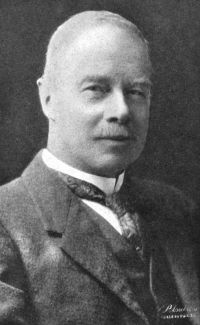
George Vernon Hudson

George Vernon Hudson

Summary

Portrait of George Vernon Hudson George Vernon Hudson New Zealand Moths and Butterflies… (1898)

I have often found a large subterranean caterpillar, that I believe to be the larva of this insect; but as I have never succeeded in rearing a specimen, I cannot assign it to this species with absolute certainty.
The length of this larva when full grown is nearly 3 inches. Its colour is dirty white, becoming darker on the back. The head is dark brown, very rough and horny; the three first segments are also horny on the dorsal surface. The rest of the body is very much softer, and is furnished with several horny tubercles, each of which emits a long bristle.
Source: Wikisource

Portrait of George Vernon Hudson George Vernon Hudson New Zealand Moths and Butterflies… (1898)

The perfect insect appears in December and January, and frequents forests. It is especially fond of resting on the stems of tree-ferns in the daytime, where, however, it is extremely inconspicuous, and can only be discovered by very careful searching. It is also very partial to light, and specimens might perhaps be secured more plentifully, if a good attracting lamp were exhibited in a suitable locality.
Source: Wikisource

Portrait of George Vernon Hudson George Vernon Hudson New Zealand Moths and Butterflies… (1898)

When about to emerge the pupa works its way up the vertical tunnel by means of the above-mentioned hooklets, forces open the trap-door, and wriggles along the horizontal burrow until it reaches the air, only the last three or four segments remaining in the tree. Its anterior portions then break open and the moth crawls out and expands its wings in the ordinary way, resting on the trunk of the tree, until they are of sufficient strength and hardness for flight.
The perfect insect appears in October and November. Although it must be common, it is rarely seen
Source: Wikisource

Get perspective with Kwize: daily news enlightened by great literature