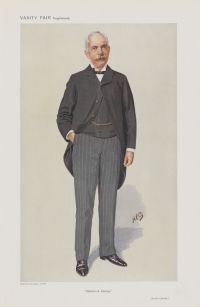
Emile Garcke

Emile Garcke

Summary

Portrait of Emile Garcke Emile Garcke 1911 Encyclopædia Britannica (1911)

In this system the cars run on ordinary wheels and take power from overhead trolley wires, But so far no such arrangement has been put into practice in Great Britain, and outlying districts are generally dealt with by petrol or steam motor vehicles, running as feeders to the tramway sand railways. The future commercial development of tramways lies more in the economics in working than in growth of track mileage. Owing, to the enormous volume of traffic a very slight alteration in one, of the items of expense or revenue produces a large result in the aggregate.
Source: Wikisource

Portrait of Emile Garcke Emile Garcke 1911 Encyclopædia Britannica (1911)

In urban districts the road authorities almost always require the tramway surface, i.e. between the rails and for 18 in. on either side, to be paved. In country districts many tramways have been laid with only a sett edging along each rail, the remainder of the surface being completed with either ordinary or tarred macadam. This construction, however, is only suitable on roads with very light traffic. After a tramway is laid, especially in a macadamized road, the heavy vehicular traffic use the track, and the wear is very much greater than on other parts of the carriage-way.
Source: Wikisource

Get perspective with Kwize: daily news enlightened by great literature