Electric traction

Definition and stakes

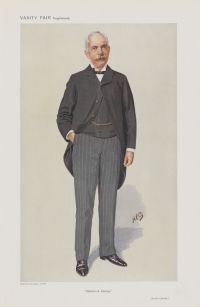
Adam Gowens Whyte,  Electricity in Locomotion

“ Some of the aspects of electric traction are highly technical; others are purely financial. It is impossible to understand the achievements and possibilities of electricity in locomotion without a certain amount of discussion of both these points of view; but it is not necessary to go deeply into either in order to catch some of the enthusiasm which inspires the electrical engineer in his efforts to extend electric traction everywhere on road and rail. The hopes of electrical conquest extend, indeed, to locomotion on the sea and in the air as well as on the land. ”
Source: Gutenberg

Archibald Williams,  How it Works

“ On electric cars the motor is generally suspended from the wheel truck, and a small pinion on the armature shaft gears with a large pinion on a wheel axle. One great advantage of electric traction is that every vehicle of a train can carry its own motor, so that the whole weight of the train may be used to get a grip on the rails when starting. Where a single steam locomotive is used, the adhesion of its driving-wheels only is available for overcoming the inertia of the load ”
Source: Gutenberg

Various,  The New Gresham Encyclopedia. Ebert to Estremadura

“ Electric Traction and Electric Tramway. In electric traction the mechanical power required for the propulsion of the vehicle is obtained from electric motors. These motors are usually series direct-current motors, but for railway work single-phase and three-phase A.C. motors have also been successfully employed (see Electric Motors) . Up to the present, electric traction on railways has only been employed for suburban traffic in this country. In one instance (L.B. & S.C.R. electrification) single-phase alternating current is used. ”
Source: Gutenberg

Get perspective with Kwize: daily news enlightened by great literature