James Alfred Ewing

Biographical details

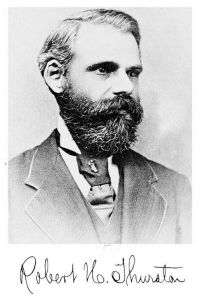
Portrait of James Alfred Ewing James Alfred Ewing,  1911 Encyclopædia Britannica (1911)

“ Mechanically the working substance is a medium capable of exerting pressure, which effects this transformation in doing work by means of the changes of volume which it undergoes in the operation of the machine. Regarded as a thermodynamic device, the function of the engine is to get as much work as possible from a given quantity of heat or, to go a step further back, from the combustion of a given quantity of fuel. Accordingly, a question of primary importance is what is called the efficiency of the engine, which is the ratio of the work done to the heat supplied. ”
Source: Wikisource

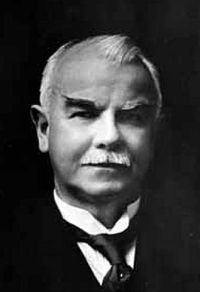
Portrait of James Alfred Ewing James Alfred Ewing,  Encyclopædia Britannica, Ninth Edition (1888)

“ The system of storage, by means of secondary batteries, has the great advantage over the system of transmission through a conductor that it makes each car independent and that it is applicable to ordinary tramway lines. As regards economy of power, we have in the storage system a more complex series of transformation of energy, and therefore a larger number of items of loss. In both, systems alike we have a certain loss of energy at the dynamo and at the motor. ”
Source: Wikisource

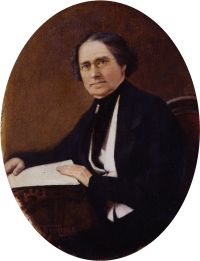
Portrait of James Alfred Ewing James Alfred Ewing,  1911 Encyclopædia Britannica (1911)

“ It is obvious from this consideration that the ultimate strength of a shaft to resist torsion is no more deducible from a knowledge of the ultimate shearing strength of the material than the ultimate strength of a beam to resist bending is deducible from a knowledge of the tensile and crushing strength. It should be noticed also that as regards ultimate strength a solid shaft has an important advantage over a hollow shaft of the same elastic strength, or a hollow shaft so proportioned that the greatest working intensity of stress is the same as in the solid shaft. ”
Source: Wikisource

Get perspective with Kwize: daily news enlightened by great literature