Hysteresis

Definition and stakes

1911 Encyclopædia Britannica, Volume 14… (1911)

“ In consequence of hysteresis the process of magnetizing a piece of iron to a certain intensity and then restoring it to its original condition, or of effecting a double reversal of its magnetization, involves the expenditure of energy, which is dissipated as heat in the iron. Electrical generators and transformers often contain pieces of iron the magnetization of which is reversed many times in a second, and in order to economize power and to avoid undue heating it is essential that hysteresis should in such cases be as small as possible. ”
Source: Wikisource

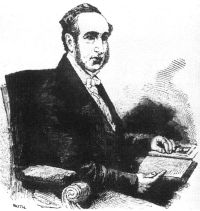
Portrait of Isaac Baker Brown Isaac Baker Brown,  On the Curability of Certain Forms of Insanity…

“ I am confident that I have met with many instances in which the nerve power has become so weakened that the patient, without having organic disease, really feels all the symptoms she describes, and is only too anxious to be cured. The cases I shall now narrate are a few of a large number that have come under my care, and I am not without hope that their relation may show that hysteria, instead of being a term of reproach, does truly represent a curable disease. ”
Source: Gutenberg

Austin O'Malley,  Essays In Pastoral Medicine

“ Briquet found 11 male to 204 female hysterics, and later statistics increase the number of males.
The disease is not readily definable. The patient is usually a young emotional woman, oftenest between 15 and 20 years of age. She commonly has anaesthetic spots on her body, concentric limitations of the field of vision, and hystero-genetic zones, or tender points, which, when pressed, appear to inhibit the hysterical fit. The symptoms enumerated here are not, however, found in every case of hysteria, and it is difficult at times to diagnose the disease.
”
Source: Gutenberg

Get perspective with Kwize: daily news enlightened by great literature