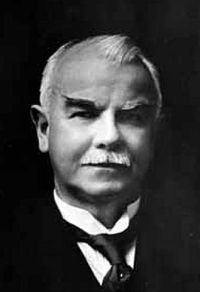
Werner von Siemens

Definition and stakes

Michael Pupin,  From Immigrant to Inventor (1922)

“ Ernst Werner von Siemens was at that time, next to Helmholtz, the most admired scientist in the German Empire. He was the head of a great electrical plant in the heart of Berlin, and was known everywhere to possess a splendid combination of talents in abstract science and engineering. Men of that type were quite rare in those days, and they are very rare even to-day. I heard a great deal about him in a course of lectures on electrical engineering which I attended at the Polytechnic School of Berlin. ”
Source: Gutenberg

Various,  Popular Science Monthly (1893)

“ WITH Werner Siemens, says a German biographer, died a prince of science, a pathbreaker in the region of electro-technics, a man whose activity extended far beyond his own narrow district, bearing fruit in other branches of human achievement; one of the greatest industrial characters, not of Germany only, but of the whole world; an industrial character, however, to whom gain was never an object in itself, but who rather found in it the incentive to new scientific studies.
Ernst Werner Siemens was born at Lenthe, Hanover, December 13, 1816, and died in Berlin, December 6, 1893.
”
Source: Wikisource

Portrait of Leslie Stephen Leslie Stephen,  Dictionary of National Biography… (1897)

“ Meantime he had turned his attention to electrical science, and was building up another reputation. On the first introduction of the electric telegraph, Werner Siemens appreciated its possibilities, and determined to devote himself to its development. In 1847 he associated himself with Halske and founded in Berlin the great firm of Siemens & Halske, of which William was appointed the London agent. Werner discovered the method of insulating telegraph-wires with gutta-percha, and the use of such wires for conveying messages under water led to the invention of submarine cables. ”
Source: Wikisource

Get perspective with Kwize: daily news enlightened by great literature